
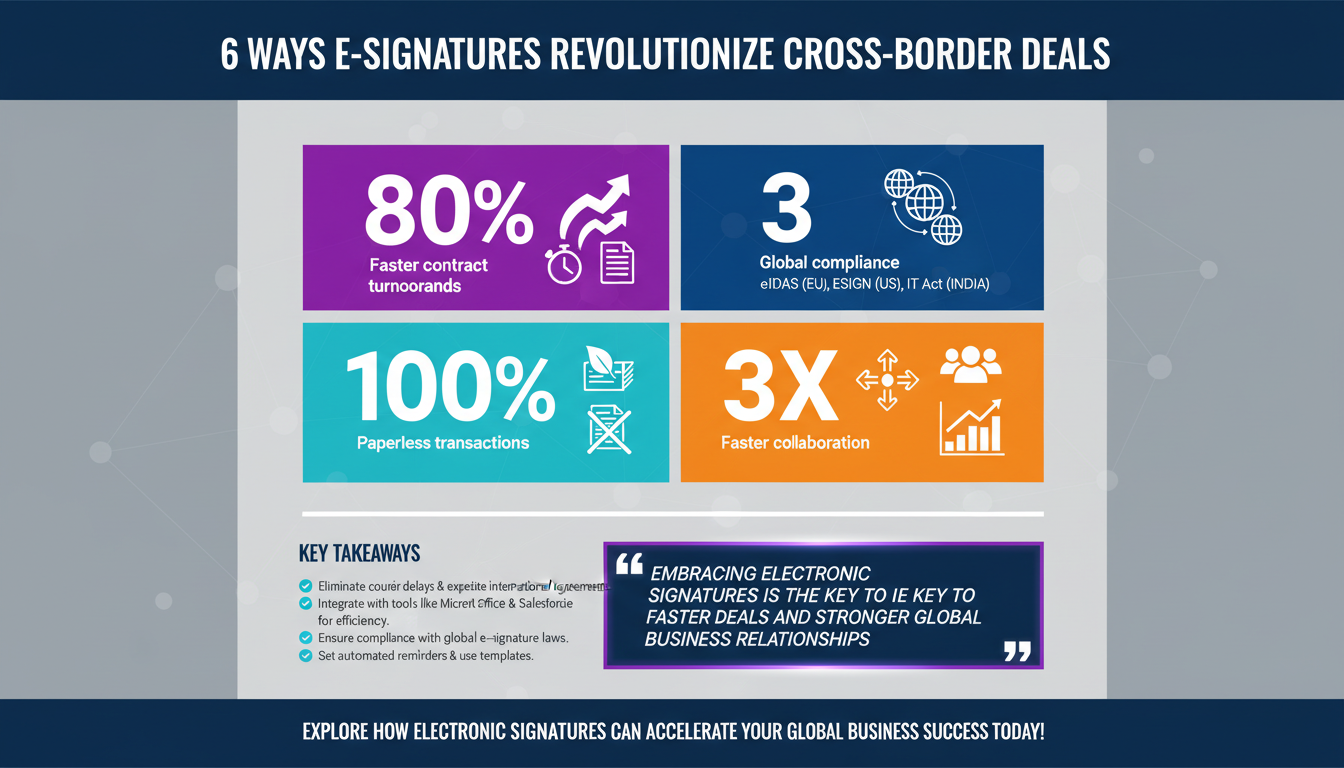
In today's interconnected global economy, businesses of all sizes are engaging in cross-border transactions. While international expansion creates immense opportunities, it also introduces complexities, especially when it comes to managing contracts, agreements, and regulatory compliance. Enter electronic signatures—a transformative solution designed to streamline these processes while ensuring international legal and regulatory adherence.
This definitive guide explores six key ways electronic signatures simplify cross-border business transactions, reduce friction, and ensure compliance with international standards.
1. Accelerating Contract Turnaround Times Across Borders
One of the most significant challenges in cross-border transactions is the time lag caused by traditional paper-based methods. Businesses often encounter delays due to courier services, physical document handling, and time zone differences. Electronic signatures eliminate these bottlenecks by enabling instant document execution, regardless of location.
For example, an international real estate firm negotiating a deal between stakeholders in the United States and Europe can use electronic signatures to finalize contracts in hours instead of weeks. By digitizing the signing process, electronic signatures remove the dependency on physical documents, ensuring that deals move forward swiftly without disruptions.

According to a Gartner report, implementing electronic signatures can reduce contract turnaround times by up to 80%. This speed not only boosts operational efficiency but also provides businesses with a competitive edge in seizing time-sensitive opportunities.
Key Benefits:
- Eliminates courier and mailing delays for international agreements.
- Ensures faster deal closures, improving cash flow and business agility.
- Minimizes the risk of losing documents in transit.
Moreover, electronic signatures allow for simultaneous collaboration from multiple parties. For example, if a deal involves stakeholders from three different countries, each party can review and sign the document in real-time. This level of efficiency is unattainable with traditional paper-based processes, where each signature requires sequential shipping.
How to Maximize Efficiency:
- Use platforms that integrate with popular tools like Microsoft Office, Google Docs, or Salesforce to keep the document flow seamless.
- Set automated reminders for recipients to ensure timely completion of signatures.
- Leverage templates for frequently used agreements to save preparation time.
Expert Insight: "The ability to execute contracts in real-time has shifted the playing field for cross-border transactions," says Sarah Lin, a global business consultant at Deloitte. "Companies that embrace electronic signatures not only save time but also build trust with international partners through seamless collaboration."
2. Ensuring Compliance with Global E-Signature Laws
Compliance is a critical consideration in cross-border transactions. Different countries have unique legal frameworks governing electronic signatures, such as the eIDAS Regulation in the European Union, the ESIGN Act in the United States, and the Information Technology Act in India. Navigating these regulations can be daunting for global businesses.
Modern electronic signature platforms, such as Zignature, are designed to comply with these laws, ensuring that electronically signed documents are legally binding and admissible in court. These solutions incorporate advanced features like audit trails, tamper-proof seals, and identity verification to meet stringent regulatory requirements.
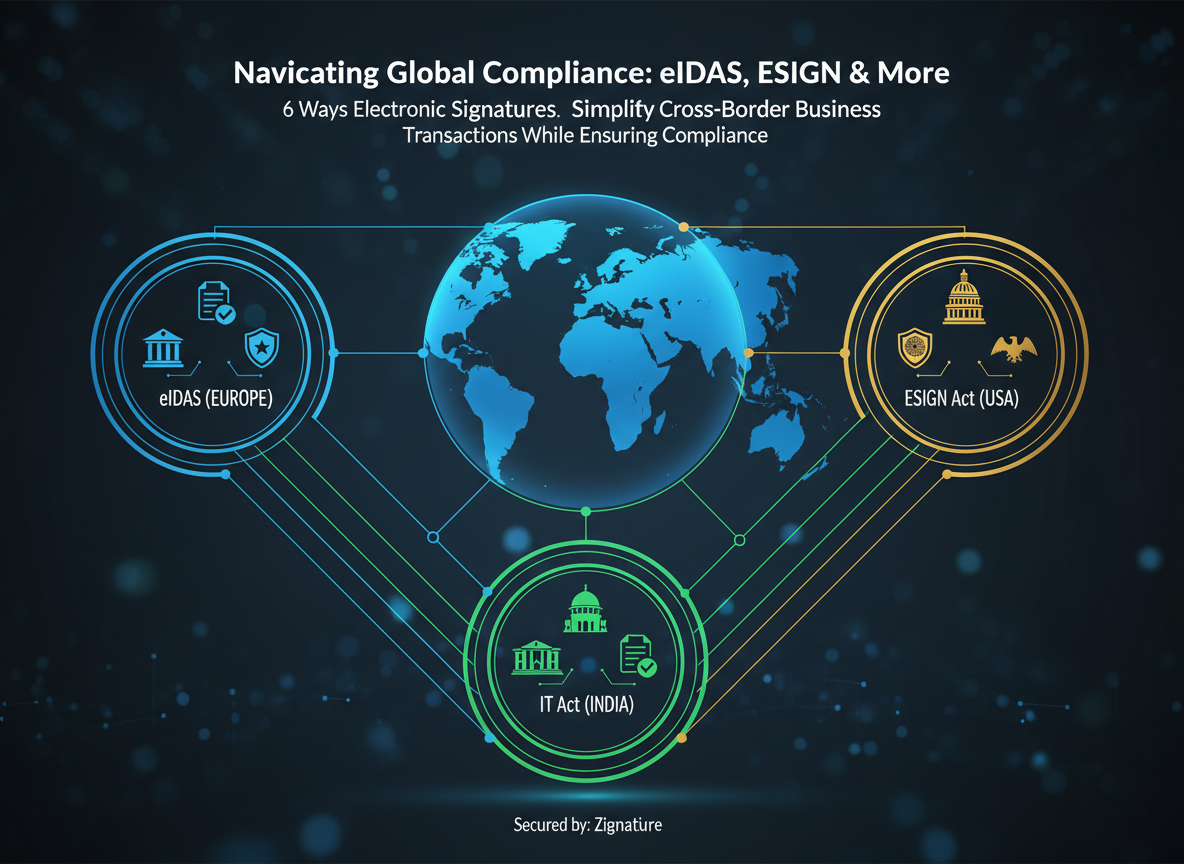
For instance, the eIDAS Regulation sets specific standards for electronic signatures in the EU, categorizing them into three levels: simple, advanced, and qualified. Businesses using compliant platforms can confidently navigate these requirements, mitigating risks associated with non-compliance.
Key Compliance Features:
- Built-in adherence to region-specific e-signature laws.
- Comprehensive audit trails for transparency and accountability.
- Encryption and tamper-proofing to secure document integrity.
In addition to legal compliance, cultural norms and expectations also play a role in ensuring smooth cross-border transactions. For example, in Japan, contracts often include personal seals known as "hanko." Some e-signature platforms now allow for digital hanko integration, combining legal compliance with respect for local practices.
Steps to Ensure Compliance:
- Research the electronic signature laws in the countries where you conduct business.
- Choose a platform that offers multi-jurisdictional compliance features.
- Regularly audit your e-signature processes to ensure ongoing adherence to evolving regulations.
Common Mistake: Failing to verify whether your electronic signature solution complies with the local laws of the countries you operate in can lead to invalid contracts and legal disputes.
3. Enhancing Security and Fraud Prevention
Security concerns are amplified in cross-border transactions due to the involvement of multiple jurisdictions, intermediaries, and sensitive data. Traditional paper-based processes are vulnerable to forgery, tampering, and unauthorized access. Electronic signatures address these risks by leveraging cutting-edge security measures.
Features such as multi-factor authentication, digital certificates, and blockchain-based verification ensure that only authorized parties can access and sign documents. These technologies also create an immutable record of the signing process, providing robust protection against fraud.

According to a Forrester study, businesses that adopt electronic signatures experience a 63% reduction in document-related fraud incidents, highlighting the effectiveness of these solutions in safeguarding sensitive transactions.
Security Features to Look For:
- End-to-end encryption to protect data during transmission.
- Biometric authentication for enhanced identity verification.
- Blockchain integration for tamper-proof audit trails.
Beyond these features, some platforms provide geo-location tracking, which records the physical location of signatories when they sign a document. This adds another layer of security, particularly for high-value transactions. For example, a U.S.-based company signing a contract with a supplier in China can verify that the signature originated from the supplier's registered address.
Checklist for Secure E-Signatures:
- Ensure the platform uses SSL encryption for data transmission.
- Opt for multi-factor authentication to verify user identities.
- Look for certifications such as ISO 27001, SOC 2, and GDPR compliance.
- Enable real-time alerts for unauthorized access attempts.
Quick Win: Choose electronic signature solutions that offer advanced security certifications such as ISO 27001, SOC 2, and GDPR compliance to ensure the highest level of data protection.
4. Simplifying Multi-Language and Multi-Currency Transactions
Cross-border transactions often involve parties speaking different languages and dealing in multiple currencies. Electronic signature platforms simplify these complexities by offering multilingual interfaces and integrated currency conversion features.
For example, Zignature supports over 20 languages and allows users to customize agreements in their preferred language, reducing the risk of miscommunication. Additionally, integrated currency calculators ensure that all financial terms are accurately represented, fostering clarity and trust among international partners.

Research from the World Bank indicates that language barriers and currency discrepancies are among the top challenges in global trade. By addressing these issues, electronic signatures pave the way for smoother transactions and stronger partnerships.
Benefits of Multi-Language Support:
- Reduces misunderstandings caused by language barriers.
- Ensures clarity in terms and conditions for all parties.
- Enhances user experience for international stakeholders.
Pro Tip:
When working with international partners, consider including a clause in your agreements specifying which language version will prevail in the event of a dispute. Many electronic signature platforms allow you to include such provisions seamlessly.
5. Reducing Costs Associated with Cross-Border Transactions
Traditional cross-border transactions often entail significant costs, including courier fees, printing expenses, and administrative overheads. Electronic signatures eliminate these costs, offering a more economical alternative.
A study by McKinsey found that businesses can save up to 70% on document-related expenses by transitioning to electronic signatures. These savings can be reinvested into other strategic initiatives, driving business growth.

Cost-Saving Opportunities:
- Eliminates the need for paper, ink, and courier services.
- Reduces administrative labor costs associated with manual processes.
- Minimizes errors and rework, saving time and resources.
Pro Tip: Calculate your potential savings by using a cost-savings calculator provided by most electronic signature platforms. This can help quantify the ROI of your investment.
6. Streamlining Audit and Regulatory Reporting
Audit trails are indispensable for cross-border transactions, especially in regulated industries like finance, healthcare, and legal. Electronic signatures automatically generate detailed audit logs, capturing every step of the signing process, including timestamps, IP addresses, and user actions.
These logs simplify compliance reporting and reduce the burden of preparing for audits. For instance, a multinational pharmaceutical company can provide regulators with a comprehensive digital record of all agreements, ensuring compliance with global standards like GDPR and HIPAA.
According to Accenture research, businesses that leverage digital audit trails experience a 45% reduction in audit preparation time, freeing up resources for other critical tasks.
Key Takeaways:
- Automated audit trails ensure transparency and accountability.
- Streamlined reporting reduces the risk of regulatory penalties.
- Comprehensive logs enhance trust with stakeholders and auditors.
FAQs
What makes electronic signatures legally binding across borders?
Electronic signatures are legally binding because they comply with international regulations like eIDAS, ESIGN, and the UNCITRAL Model Law on Electronic Commerce. These laws ensure that electronic signatures have the same legal validity as handwritten ones.
How do electronic signatures address security concerns?
Electronic signatures employ advanced security features such as encryption, multi-factor authentication, and tamper-proof seals. These measures ensure that documents remain secure and accessible only to authorized parties.
Can electronic signatures handle multi-language agreements?
Yes, modern platforms like Zignature provide multilingual support, enabling users to create and execute agreements in their preferred languages, thereby reducing misunderstandings and fostering global collaboration.
Are electronic signatures cost-effective for small businesses?
Absolutely. By eliminating costs associated with printing, mailing, and administrative tasks, electronic signatures offer significant savings, making them a cost-effective solution for businesses of all sizes.
Conclusion
Electronic signatures have revolutionized the way businesses execute cross-border transactions. By accelerating contract turnaround times, ensuring compliance with global laws, enhancing security, and reducing costs, they provide a robust solution for navigating the complexities of international trade.
As the global economy continues to evolve, businesses that adopt electronic signatures will not only stay ahead of the curve but also build stronger, more efficient partnerships across borders. Ready to streamline your cross-border transactions? Explore Zignature's features today.
To further enhance your digital workflows, explore our sister platforms: Apparatuz for workflow automation, Applicantz for recruitment management, Schedly for scheduling and appointments, Supportly for customer support, and Zatisfied for feedback management. Together, these tools create a comprehensive ecosystem that complements your digital signature strategy.