
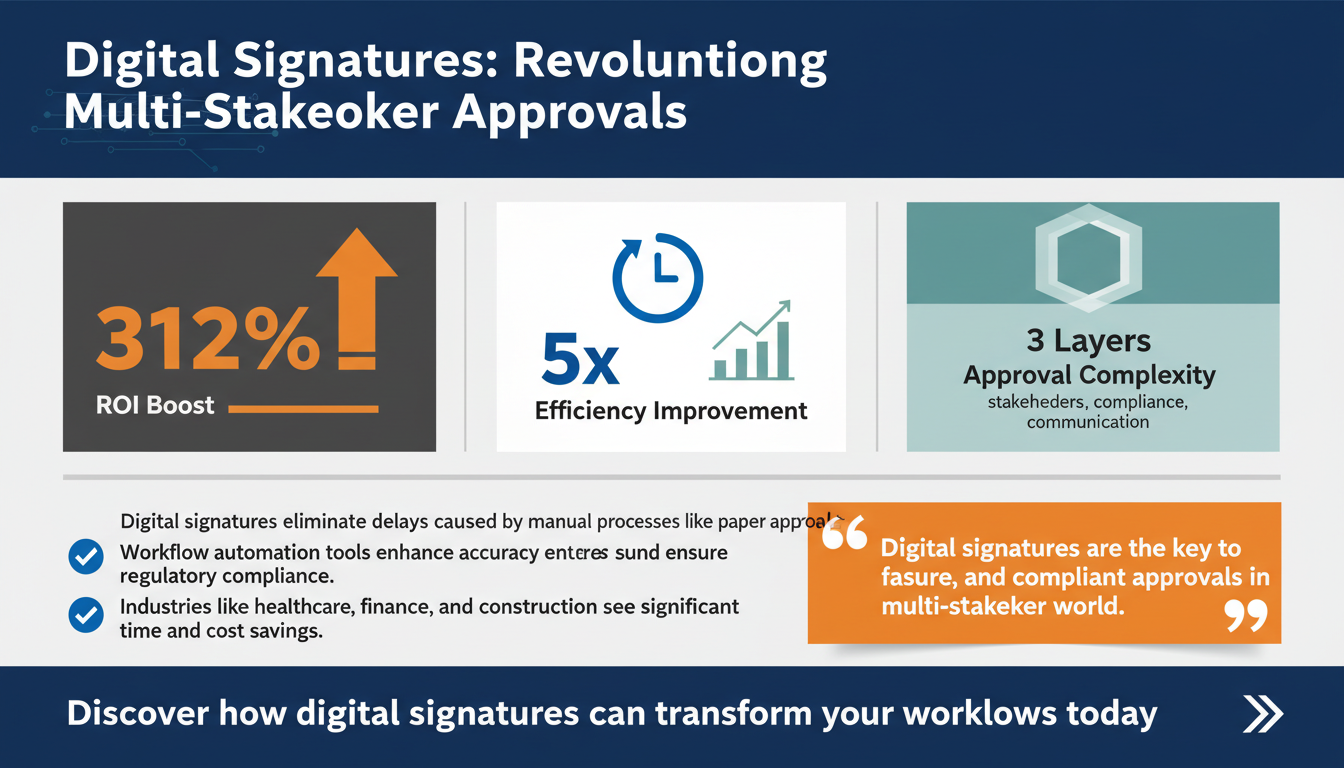
In today’s hyper-competitive business environment, efficiency is no longer a luxury—it’s a necessity. Organizations are under immense pressure to optimize operations, accelerate decision-making, and remain agile in the face of constant change. One area that has seen significant innovation is document approval workflows, particularly in scenarios involving multiple stakeholders. At the heart of this transformation lies the adoption of digital signatures, a technology that has redefined how businesses manage approvals, enforce compliance, and streamline operations.
Digital signatures are more than just electronic marks on a document—they represent a secure, legally binding, and efficient way to authenticate approvals. From facilitating global collaborations to minimizing bottlenecks, digital signatures are reshaping how multi-stakeholder workflows function. This article delves into the crucial role of digital signatures, backed by data, expert insights, and actionable strategies for businesses seeking to modernize their processes.
The Role of Multi-Stakeholder Workflows in Modern Business
Multi-stakeholder workflows are central to many business operations, especially in industries that require collaborative decision-making. Whether it’s signing a multi-million-dollar contract, approving a marketing budget, or executing a real estate deal, these workflows typically involve a network of internal and external stakeholders. The complexity increases with factors like geographical dispersion, regulatory requirements, and the sheer number of touchpoints involved.

Challenges in Traditional Multi-Stakeholder Workflows
Traditional workflows often rely on manual processes such as paper-based approvals, email chains, and in-person meetings. These methods are not only time-consuming but also prone to human errors. Documents can be misplaced, signatures can be missed, and communication breakdowns can occur, leading to significant delays. For example, in a typical procurement process involving multiple departments, a single misplaced purchase order can push timelines back by weeks.
Additionally, the reliance on physical documents can create bottlenecks. For instance, contracts that require signatures from stakeholders in different geographical locations often involve courier services or fax machines, which are neither secure nor efficient. These challenges are amplified in industries like construction, healthcare, and finance, where compliance and accuracy are critical.
Real-World Applications Across Industries
Consider the example of a construction project. Before breaking ground, the project must go through several layers of approval—architects, engineers, contractors, legal advisors, and municipal authorities. Each stakeholder often has unique demands, ranging from additional documentation to regulatory compliance. Traditional workflows reliant on paper-based approvals can lead to delays, lost documents, and miscommunication. A missed signature or misplaced file can derail timelines, costing both time and money.
Similarly, in the healthcare sector, hospitals and insurance companies often collaborate to process claims, a process that involves a maze of approvals. Digital signatures not only simplify this process but also ensure that sensitive patient information is handled securely and in compliance with regulations like HIPAA. According to a Forrester report, companies that adopt workflow automation tools, including digital signatures, achieve a return on investment of up to 312%. The ROI stems from reduced delays, enhanced accuracy, and better compliance management—factors that are particularly vital in multi-stakeholder environments.
Pro Tip: Streamline Stakeholder Communication
To minimize delays in multi-stakeholder workflows, implement a centralized communication platform alongside digital signature tools. Platforms like Slack or Microsoft Teams can be integrated with digital signature software to provide real-time updates, ensuring all stakeholders are aligned throughout the process.
How Digital Signatures Accelerate Approval Processes
Time is a critical factor in any approval process. Traditional methods, which often involve printing, signing, scanning, and emailing documents, introduce friction at every step. Digital signatures eliminate these inefficiencies, enabling faster, smoother, and more reliable workflows. Here’s how they do it:

1. Instant Communication and Accessibility
One of the most significant advantages of digital signatures is the ability to sign documents electronically from anywhere, on any device. This feature is particularly important for organizations with global teams or external partners operating in different time zones. What previously required days—or even weeks—can now be accomplished in a matter of hours.
For example, a cross-border trade agreement often involves stakeholders from different countries. Using a digital signature platform, all parties can review, edit, and sign the document in real-time, eliminating the need for courier services or in-person meetings. Research from HubSpot shows that organizations implementing automated tools, including digital signatures, see a 40% reduction in approval times.
Additionally, digital signature platforms often include mobile apps, allowing stakeholders to sign documents on the go. This level of accessibility is transformative for industries like real estate, where deals often hinge on timely approvals.
2. Automated Workflow Tracking
Another critical feature of digital signature platforms is their ability to track workflows automatically. Stakeholders can monitor the status of documents, receive notifications for pending actions, and set deadlines for approvals. This level of transparency ensures that no step is overlooked, reducing bottlenecks and enhancing accountability.
Take the example of a marketing campaign that requires input from multiple departments—creative, finance, and compliance. A digital signature platform can centralize the process, ensuring that each department completes its part on time. Platforms like DocuSign and Zignature provide dashboards that display real-time progress, making it easy to identify and address delays.
3. Integration with Existing Tools
Digital signature platforms often integrate seamlessly with other business tools like customer relationship management (CRM) systems, project management software, and cloud storage solutions. For example, integrating DocuSign with Salesforce allows sales teams to generate, send, and sign contracts directly within the CRM, reducing the need to switch between multiple platforms and enhancing productivity.
Expert Insight: The ROI of Time Savings
"Every minute saved in the approval process translates to tangible benefits," says Dr. Elaine Carter, a workflow optimization consultant. "For large organizations, even a 10% reduction in approval times can lead to millions in cost savings and faster time-to-market for products and services."
Ensuring Compliance and Security in Multi-Stakeholder Workflows
While speed and efficiency are critical, they cannot come at the expense of security and compliance. For industries like finance, healthcare, and legal services, adhering to regulatory standards is non-negotiable. Digital signatures address these concerns through robust security measures and compliance features.

1. Robust Authentication Mechanisms
Authentication is a cornerstone of any secure approval process. Digital signature solutions often incorporate advanced mechanisms like multi-factor authentication (MFA), ensuring that only authorized individuals can sign documents. This significantly reduces the risk of fraud or unauthorized access.
According to Gartner, 85% of enterprises have adopted MFA in some form, driven by the need to combat cyber threats. Digital signature platforms build on this trend, offering features like biometric authentication, one-time passwords, and digital certificates. This makes them particularly valuable in sectors where sensitive data is at stake, such as healthcare and legal services.
2. Tamper-Proof Audit Trails
Every document signed digitally comes with an audit trail—a record of all actions taken on the document, including timestamps, signer identities, and IP addresses. This level of transparency not only ensures compliance with regulations like GDPR and HIPAA but also provides a layer of legal protection in case of disputes.
For instance, in the event of a contractual disagreement, the audit trail can serve as evidence that all parties reviewed and approved the terms. This feature is invaluable in industries where documentation is often scrutinized by regulators or legal entities.
Pro Tip: Leverage Blockchain Technology
Some advanced digital signature platforms are beginning to incorporate blockchain technology to create immutable records of signed documents. This ensures an additional layer of security and transparency, making it nearly impossible for signed documents to be tampered with.
Breaking Down the Key Benefits of Digital Signatures for Businesses
Beyond accelerating approvals and ensuring compliance, digital signatures offer a host of additional benefits:

1. Cost Savings
Processing documents the traditional way incurs costs related to printing, shipping, and storage. Digital signatures eliminate these expenses entirely. A study by Deloitte found that companies save an average of $20 per document by transitioning to digital workflows. For organizations processing thousands of documents annually, the savings are substantial.
Moreover, digital signatures reduce the need for physical storage space, which can be a significant expense for companies dealing with high volumes of paperwork. By digitizing documents, businesses can allocate resources more efficiently and focus on growth-oriented activities.
2. Improved Collaboration
Collaboration is at the heart of any multi-stakeholder workflow. Digital signature platforms facilitate real-time document sharing and editing, enabling teams to work together seamlessly, regardless of their location. This is particularly beneficial for industries like software development, where agile workflows demand constant iteration and feedback.
In the legal industry, for instance, attorneys can use digital signature platforms to collaborate with clients and other legal professionals, quickly exchanging and signing documents without needing to schedule in-person meetings. This not only saves time but also reduces the risk of errors or miscommunications.
3. Enhanced Customer Experience
Faster approvals translate to quicker service delivery, which directly impacts customer satisfaction. For instance, a bank using digital signatures for loan approvals can significantly reduce the time it takes to process applications, giving it a competitive edge in the market. Customers are more likely to trust and recommend businesses that offer streamlined, hassle-free experiences.
In e-commerce, digital signatures can expedite vendor agreements and product onboarding, ensuring that customers have access to a wider range of products in less time. This creates a win-win scenario for both businesses and their customers.
Building a Proprietary Framework: The FAST Workflow Model
To help businesses maximize the benefits of digital signatures, we’ve developed the FAST Workflow Model:
- F: Facilitate collaboration by centralizing document management.
- A: Automate notifications and reminders to ensure timely approvals.
- S: Secure documents with robust authentication and encryption.
- T: Track progress with real-time dashboards and audit trails.
Implementing this model can help organizations not only accelerate workflows but also maintain the highest standards of security and compliance.
Step-by-Step Implementation Checklist
- Identify key workflows that would benefit most from digital signatures.
- Evaluate digital signature platforms that align with your industry requirements.
- Train employees on how to use the platform effectively.
- Integrate the platform with existing tools like your CRM or project management software.
- Regularly review and optimize workflows to ensure continued efficiency.
Overcoming Common Pitfalls in Digital Signature Implementation
Despite their advantages, digital signatures are not a plug-and-play solution. Organizations must address potential challenges to ensure successful implementation:
1. Lack of Training
Employees may resist adopting new technologies if they are not adequately trained. Comprehensive onboarding sessions and user-friendly interfaces can mitigate this issue. Companies can also create step-by-step guides or video tutorials to help employees navigate the platform.
2. Choosing Inadequate Solutions
Not all digital signature platforms are created equal. Businesses should evaluate options based on their specific needs, such as scalability, industry compliance, and integration capabilities. For example, a small business might prioritize cost-effective solutions, while an enterprise-level organization may focus on advanced security features and scalability.
3. Ignoring Integration Needs
For maximum efficiency, digital signature tools should integrate seamlessly with existing systems like CRM, ERP, and project management software. Without proper integration, businesses may struggle to achieve the desired efficiency gains.
Expert Insight: Avoiding Common Mistakes
"A common mistake organizations make is rushing the implementation process," says workflow consultant Michael Torres. "Take the time to map out your workflows, understand your pain points, and choose a solution that aligns with your long-term goals."
Conclusion: Transform Your Workflow Today
Digital signatures are more than a technological upgrade—they’re a strategic imperative for businesses aiming to thrive in today’s fast-paced world. From accelerating approvals to ensuring compliance, they offer a comprehensive solution to the challenges of multi-stakeholder workflows. By adopting best-in-class tools and frameworks like the FAST Workflow Model, organizations can unlock unprecedented efficiency, drive growth, and deliver superior customer experiences. Ready to make the switch? Contact us today to explore how digital signatures can transform your operations.
To further enhance your digital workflows, explore our sister platforms: Apparatuz for workflow automation, Applicantz for recruitment management, Schedly for scheduling and appointments, Supportly for customer support, and Zatisfied for feedback management. Together, these tools create a comprehensive ecosystem that complements your digital signature strategy.