
The digital transformation of business processes has become a necessity in a world where efficiency, security, and adaptability are paramount. As organizations pivot to paperless workflows, digital signatures have emerged as a cornerstone for secure, efficient, and legally binding document management. However, with an overwhelming number of e-signature solutions on the market, selecting the perfect fit for your industry and business size can be a challenging task. The key is understanding which features matter most—security, usability, compliance, or integration—and tailoring your decision accordingly.
This comprehensive guide is designed to demystify the selection process for both small-to-medium businesses (SMBs) and large enterprises. By examining industry-specific needs, diving into essential features, exploring cost structures, and offering actionable advice, we aim to empower you with the knowledge to make an informed decision. Whether you operate in finance, healthcare, real estate, or technology, this resource provides expert insights, real-world case studies, and practical tips for implementation. Let’s dive in to explore how the right e-signature solution can transform your workflows and future-proof your operations.
1. Understanding the Importance of Industry-Specific E-Signature Solutions
Not all digital signature solutions are created equal. Each industry has unique requirements based on its document handling, security, and compliance needs. For instance, a healthcare organization may prioritize HIPAA compliance to safeguard sensitive patient information, whereas a real estate firm might focus on ease of use for client contracts. Understanding these nuances is critical before committing to a specific software solution.

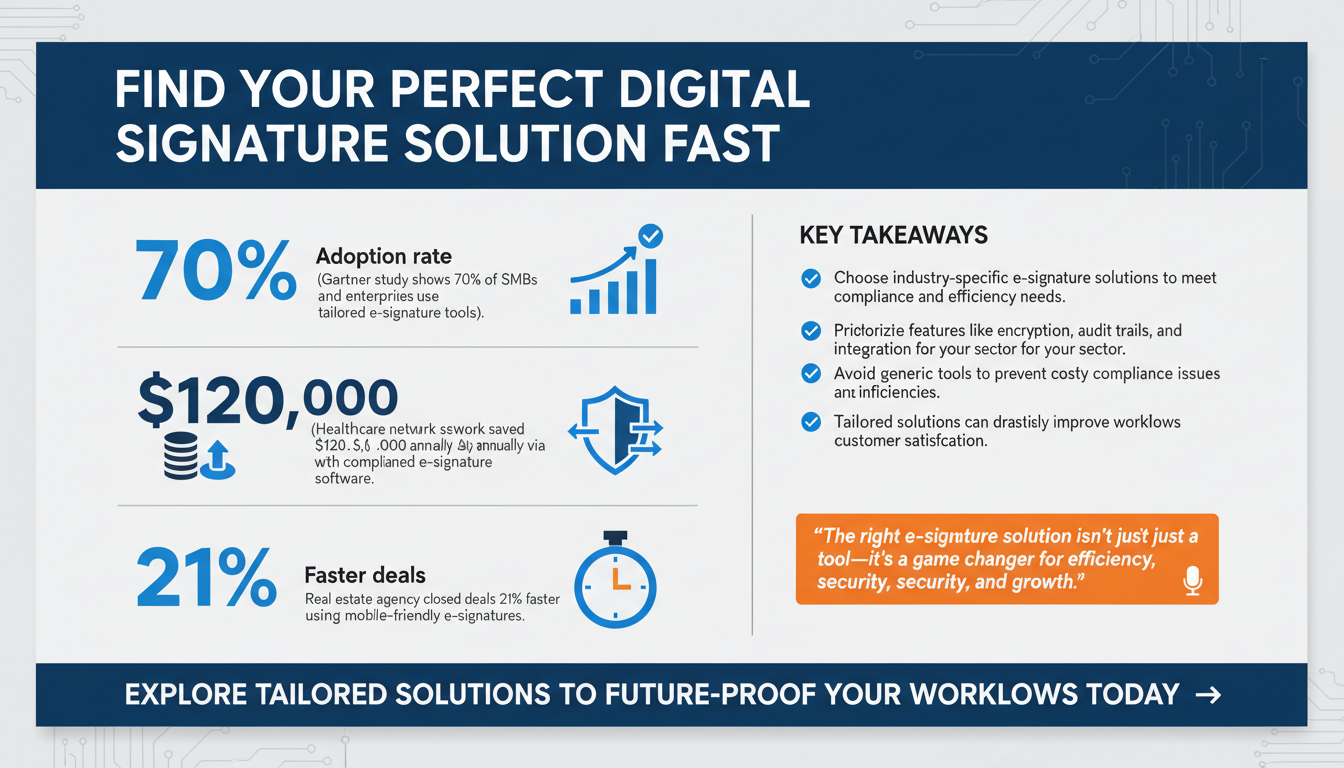
A Gartner study revealed that over 70% of SMBs and enterprises have adopted e-signature tools tailored to their industry needs. This adoption often leads to increased operational efficiency, faster workflows, and reduced legal risks, underscoring the value of finding a solution built for your sector.
1.1 Industry-Specific Features Explained
Each industry has distinct pain points that digital signature solutions must address. For example:
- Healthcare: Solutions must comply with HIPAA regulations, feature advanced encryption standards, and include audit trails to monitor document access. A hospital network in California recently implemented an e-signature tool that saved them over $120,000 annually in administrative costs while improving patient data security.
- Legal: Legal firms require tools capable of meeting global e-signature laws such as eIDAS and the U.S. ESIGN Act. These solutions should also provide robust audit trails and timestamped signatures for legal validation. A Boston-based law firm reported a 40% reduction in contract disputes after transitioning to a compliant e-signature platform.
- Finance: Platforms catering to financial institutions often integrate with CRMs like Salesforce and offer fraud detection mechanisms to prevent unauthorized transactions. A study by Deloitte found that 85% of financial institutions using tailored e-signature tools reported higher customer satisfaction rates.
- Real Estate: Ease of use and mobile accessibility are key for managing client contracts, especially when dealing with non-tech-savvy customers. A real estate agency in Texas reported closing deals 21% faster thanks to streamlined client contract signings via smartphones.
1.2 The Cost of Generic Solutions
Case studies across industries highlight the consequences of choosing a generic solution. For instance, a mid-sized healthcare provider faced compliance fines due to inadequate encryption in their chosen e-signature tool. On the other hand, a real estate firm that adopted an industry-specific solution reported a 25% increase in client satisfaction due to the streamlined signing experience.
Pro Tip: Always request a demo or trial period to test whether the solution addresses your industry-specific challenges effectively. Vendors who understand your sector are more likely to offer tailored features and support.
Key takeaway: Understand the specific challenges and regulatory requirements of your sector to identify platforms that align with your business goals.
2. Key Features to Look for in a Digital Signature Solution
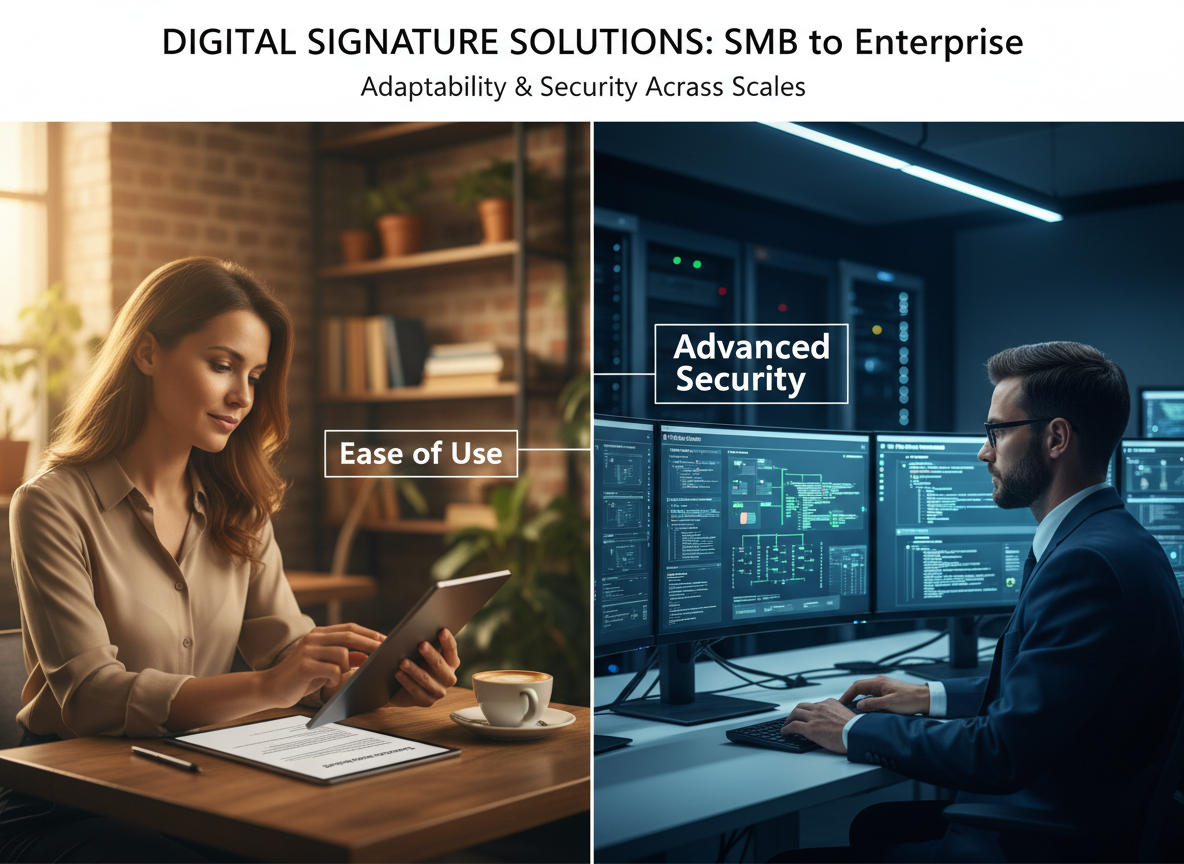
While industry requirements vary, certain features are universally important for SMBs and enterprises alike. Let’s break down the essential functionalities that every e-signature platform should offer.
2.1 Security and Compliance
Security is the backbone of any e-signature solution. Businesses should prioritize platforms offering end-to-end encryption, multi-factor authentication (MFA), and advanced fraud detection systems. Additionally, ensure the solution complies with global and regional regulations such as GDPR, eIDAS, and the U.S. ESIGN Act. Compliance is not just a legal necessity but also a safeguard against costly penalties. According to a Forrester report, compliance failures cost businesses an average of $14.8 million annually in fines and reputational damage.
For industries like healthcare and finance, robust compliance features are non-negotiable. Platforms certified with ISO 27001 or similar standards provide added assurance of secure data handling. Additionally, audit trails and timestamped signatures serve as critical proof of authenticity in legal disputes.
2.2 Integration Capabilities
A seamless integration with existing business tools is crucial for maximizing efficiency. Whether your organization relies on Salesforce, Microsoft 365, or Google Workspace, your e-signature solution should integrate effortlessly to eliminate manual data transfers and reduce errors. Integration capabilities also extend to cloud storage platforms like Dropbox or OneDrive, enabling centralized document management.
Example: A mid-sized retail business integrated its e-signature solution with its CRM and saw a 30% reduction in administrative overhead as contracts were automatically updated in the system.
2.3 Advanced Collaboration Features
Modern digital signature solutions should go beyond mere signing to facilitate collaboration. Features like real-time document tracking, shared annotations, and role-based access ensure smoother workflows, particularly for teams working across departments or geographies. For example, an international marketing agency reported a 25% boost in campaign approvals after adopting a platform with real-time collaborative tools.
Expert Insight: When choosing an e-signature tool, assess its ability to scale collaboration. Look for features like workflow automation, team dashboards, and custom permissions to maximize efficiency.
By focusing on these core features—security, compliance, integration, and collaboration—you can narrow down your options dramatically while ensuring your choice meets both current and future needs.
3. Evaluating Cost Structures: Finding Value Without Compromising Quality
Cost often plays a pivotal role in decision-making, but it’s essential to evaluate pricing models in the context of value. E-signature solutions typically offer tiered pricing based on features, user count, and usage limits. Here’s how to approach cost considerations effectively:
3.1 SMB Pricing Strategies
For SMBs: Smaller businesses may find pay-as-you-go or freemium models appealing. However, these often come with hidden costs, such as limited document storage, restricted integrations, or lack of customer support. A small accounting firm in Chicago initially chose a low-cost solution but switched to a premium platform after experiencing frequent system outages, resulting in client dissatisfaction.
3.2 Enterprise-Grade Plans
For Enterprises: Larger organizations should consider enterprise-grade plans that provide advanced features like API access, unlimited users, and dedicated account managers. While these solutions may have higher upfront costs, they often deliver significant ROI through enhanced productivity and compliance. A 2026 SaaS pricing report found that businesses investing in premium e-signature solutions saw a 42% higher ROI due to streamlined operations and reduced legal risks.
Comparison Table:
| Pricing Model | Best For | Key Features |
|---|---|---|
| Freemium | Startups, SMBs | Basic functionality, limited users |
| Pay-As-You-Go | SMBs | Flexible usage, scalable costs |
| Enterprise | Large organizations | Comprehensive features, dedicated support |
4. Compliance and Legal Considerations: Avoiding Costly Pitfalls
Compliance is an area where many businesses falter, leading to avoidable legal disputes and financial penalties. Different industries face unique regulatory challenges that must be addressed by their chosen e-signature solution:

- Healthcare: Platforms must adhere to HIPAA regulations, ensuring sensitive patient data remains secure.
- Finance: Look for solutions compatible with FINRA guidelines and PCI DSS standards to protect transaction integrity.
- Legal: Tools should support global standards such as eIDAS and ESIGN, offering audit trails and timestamped signatures for legal validation.
A McKinsey study highlighted that businesses prioritizing compliance see a 63% reduction in legal disputes over five years. This underscores the importance of aligning your solution with your industry’s regulatory framework.
5. Scalability and Future-Proofing Your Investment
Your business needs today may evolve over time, making scalability a critical factor in your decision. SMBs should look for solutions that offer easy upgrades as operations expand, while enterprises should focus on platforms with robust APIs, global compliance, and advanced analytics for large-scale deployments.
Pro Tip: Always inquire about the vendor’s product roadmap to ensure ongoing innovation and feature updates that align with industry trends.
6. Comparing Popular Options: A Framework for Decision-Making
When evaluating multiple options, use a structured decision-making framework like the “Z-Signature Matrix” to score each solution across four zones: Features, Usability, Cost, and Support. Assign weighted scores based on your business priorities to objectively identify the best fit.
7. Implementation Best Practices: Ensuring a Seamless Transition
Switching to a digital signature solution requires careful planning. Start by auditing existing workflows to identify inefficiencies. Set clear goals, such as reducing document turnaround times or achieving compliance benchmarks. Train your team thoroughly and launch a pilot program to test the solution before full-scale implementation.
8. Real-World Case Studies: Success Stories Across Industries
Healthcare:
A hospital network reduced patient intake times by 37% after adopting a HIPAA-compliant e-signature platform.
Real Estate:
A mid-sized firm closed deals 21% faster thanks to streamlined client contract signing.
Finance:
An investment firm integrated e-signatures into its CRM, reducing document errors by 45%.
FAQ: Common Questions About Digital Signature Solutions
- Are digital signatures legally binding? Yes, when compliant with laws like ESIGN and eIDAS.
- How secure are digital signatures? Advanced encryption and MFA ensure high security levels.
- What industries benefit most? Healthcare, real estate, finance, and legal are top adopters.
- How do I ensure compliance? Choose solutions validated by third-party certifications like ISO 27001.
Conclusion: The Path to a Smarter, More Secure Workflow
Choosing the best digital signature solution is a strategic decision that impacts your organization’s efficiency, security, and scalability. By aligning your choice with your industry’s needs, prioritizing compliance, and considering scalability, you can transform your workflows and future-proof your operations.
Explore our platform features or read 7 ways e-signatures are revolutionizing client onboarding for deeper insights.
To further enhance your digital workflows, explore our sister platforms: Apparatuz for workflow automation, Applicantz for recruitment management, Schedly for scheduling and appointments, Supportly for customer support, and Zatisfied for feedback management. Together, these tools create a comprehensive ecosystem that complements your digital signature strategy.