
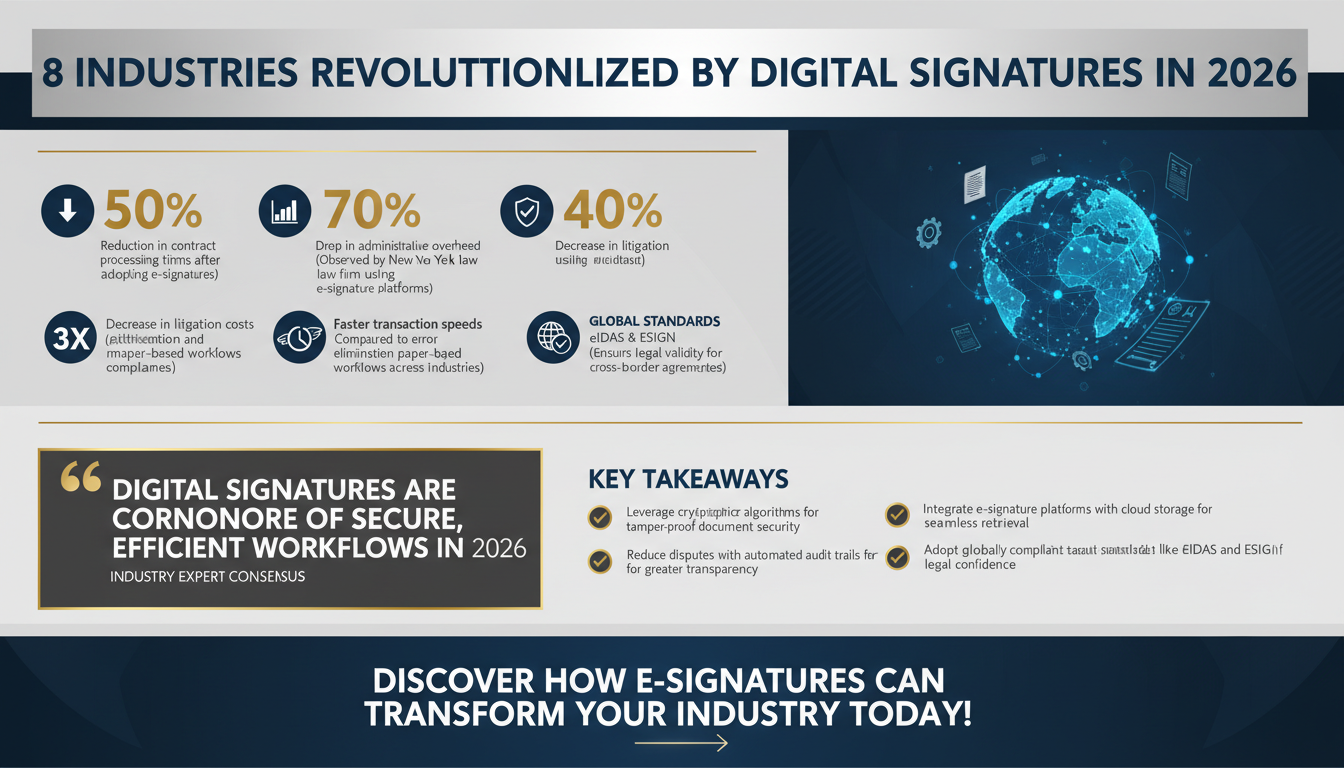
In 2026, digital signatures have become indispensable tools across industries, revolutionizing how businesses handle contracts, agreements, and workflows. Whether it’s ensuring compliance, enhancing security, or driving efficiency, these solutions are addressing long-standing challenges that have historically hindered productivity and scalability. This article explores eight major industry-specific challenges that digital signatures resolve, providing detailed insights, actionable advice, and real-world applications for leaders in legal services, healthcare, finance, real estate, and beyond.
As digital transformation accelerates, understanding how electronic signatures can be leveraged to optimize operations and reduce risks is critical. From tamper-proof document security to faster transaction speeds, the benefits span multiple sectors. Read on to discover why digital signatures are driving change and how they are shaping the future of business in 2026.
1. Legal Industry: Ensuring Document Security and Legal Compliance
The legal sector has always prioritized document security and regulatory compliance, but traditional methods of handling contracts have been time-consuming and susceptible to errors. Digital signatures solve these challenges by providing advanced security features and automated audit trails.
Advanced Security Features Provide Peace of Mind
For example, legal documents often require authentication to verify the identity of the signer and tamper-proofing to prevent unauthorized modifications. Platforms like DocuSign and Zignature use cryptographic algorithms and Public Key Infrastructure (PKI) to validate documents, ensuring integrity and authenticity. With these features, legal professionals can confidently handle sensitive documents without the fear of forgery or tampering.
Meeting Global Compliance Standards
Additionally, compliance with international regulations such as the eIDAS Regulation in the European Union and the ESIGN Act in the United States further boosts confidence in their legal validity. These frameworks establish clear guidelines that make digital signatures legally binding, even for cross-border agreements. This is particularly vital for multinational law firms that manage contracts in various jurisdictions.
Case Study: Streamlining Workflows in Practice
Case studies illustrate the transformative impact of digital signatures in legal workflows. Take a law firm in London that reported a 50% reduction in contract processing times after implementing e-signature software. Automated audit trails also reduced disputes regarding document authenticity, saving the firm thousands in legal fees annually. Another firm in New York noted a 70% reduction in administrative overhead, enabling their paralegals to focus more on case preparation than document management.
Statistics from Forrester reveal that businesses adopting digital signatures experienced a 40% reduction in litigation costs associated with document-related issues. By eliminating errors and simplifying compliance, legal professionals can focus more on strategic matters and less on administrative hurdles.
Pro Tip: Integrating Digital Signatures with Cloud Storage
Integrate digital signature platforms with cloud-based storage solutions like Google Drive or Microsoft OneDrive. This setup allows for seamless access to signed documents, ensuring they are never lost and can be retrieved instantly during audits or legal disputes.
Key Takeaway:
- Ensure compliance with global legal regulations through secure electronic signatures.
- Leverage automated audit trails for greater transparency and reduced disputes.
- Cut processing times and drive efficiency in contract workflows.
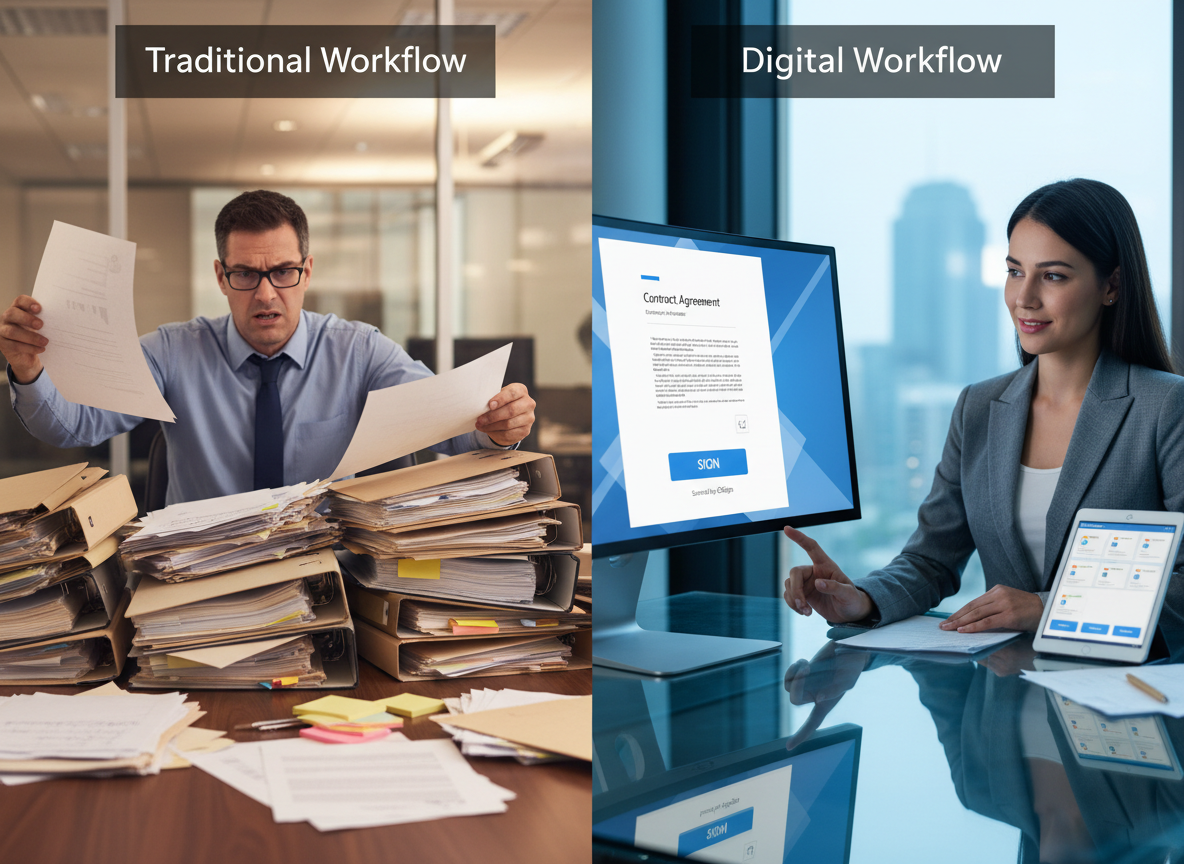
2. Healthcare: Enhancing Patient Data Security and Operational Efficiency
Healthcare organizations face an ongoing challenge of safeguarding sensitive patient data while meeting stringent regulatory requirements. Digital signatures provide encryption and tamper-proofing, ensuring the security of medical records, consent forms, and prescriptions. These tools are essential for compliance with HIPAA in the United States and GDPR in Europe.
Securing Patient Health Information
One of the most significant advantages of digital signatures in healthcare is their ability to encrypt sensitive patient data. Encryption ensures that only authorized individuals can access or modify documents, reducing the risk of data breaches. For example, an e-signed prescription cannot be altered once it’s finalized, protecting against fraudulent medication requests.
Driving Efficiency in Telemedicine
Telemedicine has surged in popularity, especially post-pandemic, making e-signatures crucial for remote patient interactions. Consent forms, treatment plans, and insurance paperwork can all be signed electronically, ensuring a seamless experience for patients and providers. Hospitals and clinics report significant operational improvements; for example, a Healthcare Dive study revealed that e-signatures reduced time spent on consent form processing by 30%, allowing doctors and staff to focus more on patient care.
Integration with EHR Systems
An additional benefit is the ability to integrate e-signatures into electronic health record (EHR) systems. This integration ensures seamless workflows, faster approvals, and enhanced accessibility for healthcare providers. For instance, a mid-sized hospital in the United States saved $1.2 million annually by reducing paper usage and minimizing administrative delays. Another example is a telehealth company that reduced patient onboarding time by 40%, accelerating their ability to deliver care.
Expert Insight: Legal Documentation in Healthcare
Dr. Emily Carson, a healthcare IT consultant, notes, "The integration of digital signatures into patient care processes is not just a convenience—it's a necessity. In an era of increasing cyber threats, maintaining the integrity of patient records is paramount, and e-signatures make this possible."
Key Takeaway:
- Protect sensitive patient data through encrypted and tamper-proof digital signatures.
- Streamline administrative workflows and reduce delays in approval processes.
- Support telemedicine services with legally compliant remote signing capabilities.

3. Finance: Mitigating Fraud and Accelerating Transaction Speeds
The finance industry is particularly vulnerable to fraud and identity theft, making security a top priority. Digital signatures address these concerns by incorporating multi-factor authentication (MFA) and blockchain technology to validate signers and ensure document integrity.
Reducing Fraud with Advanced Authentication
According to Gartner research, banks that adopted digital signature solutions saw a 70% reduction in fraud-related incidents. These solutions not only prevent forgery but also provide an audit trail that tracks every action taken on a document. For example, if a customer disputes a transaction, the bank can refer to the digital audit trail to verify the authenticity and timing of the agreement.
Accelerating Financial Transactions
These solutions also accelerate transaction speeds. For example, loan approvals that typically took days can now be completed in minutes, thanks to automated workflows. Digital signatures eliminate the need for physical meetings or mailing documents back and forth, making processes faster and more efficient. In one case, a leading bank in Canada implemented digital signatures for mortgage applications and reported a 50% reduction in processing times, resulting in higher customer satisfaction and increased scalability.
Ensuring Compliance with Financial Regulations
Digital signatures also simplify compliance with financial regulations such as SOX and AML requirements. With audit trails that track every signer’s interaction, financial institutions can ensure accountability and reduce risks tied to non-compliance. This is particularly valuable in internal audits and regulatory reviews.
Pro Tip: Blockchain-Based Digital Signatures
Consider using blockchain-based digital signatures for high-value transactions. Blockchain provides an immutable ledger that ensures transparency and prevents tampering, making it ideal for industries like finance where trust and accountability are critical.
Key Takeaway:
- Reduce fraud with advanced authentication and blockchain integration.
- Speed up transaction processes for enhanced customer satisfaction.
- Ensure compliance with finance-specific regulations such as SOX and AML.

4. Real Estate: Simplifying Contract Management and Closing Deals Faster
Real estate transactions often involve lengthy contract processes, multiple approvals, and document verification. These delays can be frustrating for agents and clients alike. Digital signatures streamline these workflows, enabling remote signing and faster closings.
Empowering Remote Transactions
For example, agents can send contracts digitally to international clients, who can sign them in real-time without the need for physical meetings. This is particularly important for high-value transactions involving overseas buyers. Research by the National Association of Realtors (NAR) shows that agents leveraging e-signatures close deals 40% faster, significantly improving client satisfaction.
Secure Document Storage and Access
Cloud-based storage solutions also ensure contracts are securely archived and easily accessible, minimizing the risk of lost documents. A brokerage firm in New York reported a 30% increase in operational efficiency after switching to digital signature workflows. These systems also simplify compliance with local real estate laws by maintaining detailed records of every transaction.
Expert Insight: Transforming Real Estate Practices
"Digital signatures have become a game-changer for real estate," says Sarah Mitchell, a top real estate agent in California. "They not only speed up closings but also build trust with clients who appreciate the added security and convenience."
Key Takeaway:
- Close deals faster with remote and real-time signing capabilities.
- Ensure secure storage of contracts to prevent document loss.
- Enhance client satisfaction with streamlined processes.

5. HR: Streamlining Employee Onboarding and Compliance
Human resources teams often face challenges in managing onboarding processes, employment contracts, and compliance-related documentation. Digital signatures simplify these workflows by enabling remote signing and automated document tracking.
Efficient Onboarding Processes
From job offer letters to benefits enrollment forms, HR professionals can manage these tasks efficiently with e-signature platforms. A study by SHRM revealed that companies using digital onboarding tools reduced paperwork completion times by 60% and improved new hire satisfaction. This efficiency is especially critical for organizations hiring at scale or managing remote teams.
Supporting Compliance Efforts
Additionally, compliance with labor laws and data protection regulations is easier to achieve with digital signatures. For example, audit trails ensure accountability in case of disputes, providing HR teams with a reliable method for tracking document interactions. This is particularly valuable for industries with frequent audits or high turnover rates.
Key Takeaway:
- Streamline onboarding processes with remote signing capabilities.
- Enhance compliance with labor and data protection laws.
- Improve employee satisfaction with faster document workflows.

6. Manufacturing: Optimizing Supply Chain Agreements
Manufacturers often manage complex supply chain agreements, involving contracts between suppliers, distributors, and logistics providers. Digital signatures simplify these workflows by accelerating approvals and enhancing transparency.
Enhancing Collaboration with Suppliers
Research by Supply Chain Dive reveals that companies using e-signature solutions report a 35% faster contract finalization rate. Timestamped audit trails also reduce disputes, as every interaction is tracked and documented. This transparency fosters stronger relationships between manufacturers and their suppliers.
Pro Tip: Integrating E-Signatures with Supply Chain Management Software
Integrate digital signature platforms with supply chain management tools like SAP or Oracle SCM to ensure end-to-end visibility and efficiency in contract workflows.
Key Takeaway:
- Accelerate contract approvals with digital workflows.
- Enhance transparency and accountability in supply chain agreements.
- Ensure compliance with industry standards and regulations.
To further enhance your digital workflows, explore our sister platforms: Apparatuz for workflow automation, Applicantz for recruitment management, Schedly for scheduling and appointments, Supportly for customer support, and Zatisfied for feedback management. Together, these tools create a comprehensive ecosystem that complements your digital signature strategy.