
The Evolution of Contract Management: A 2026 Perspective
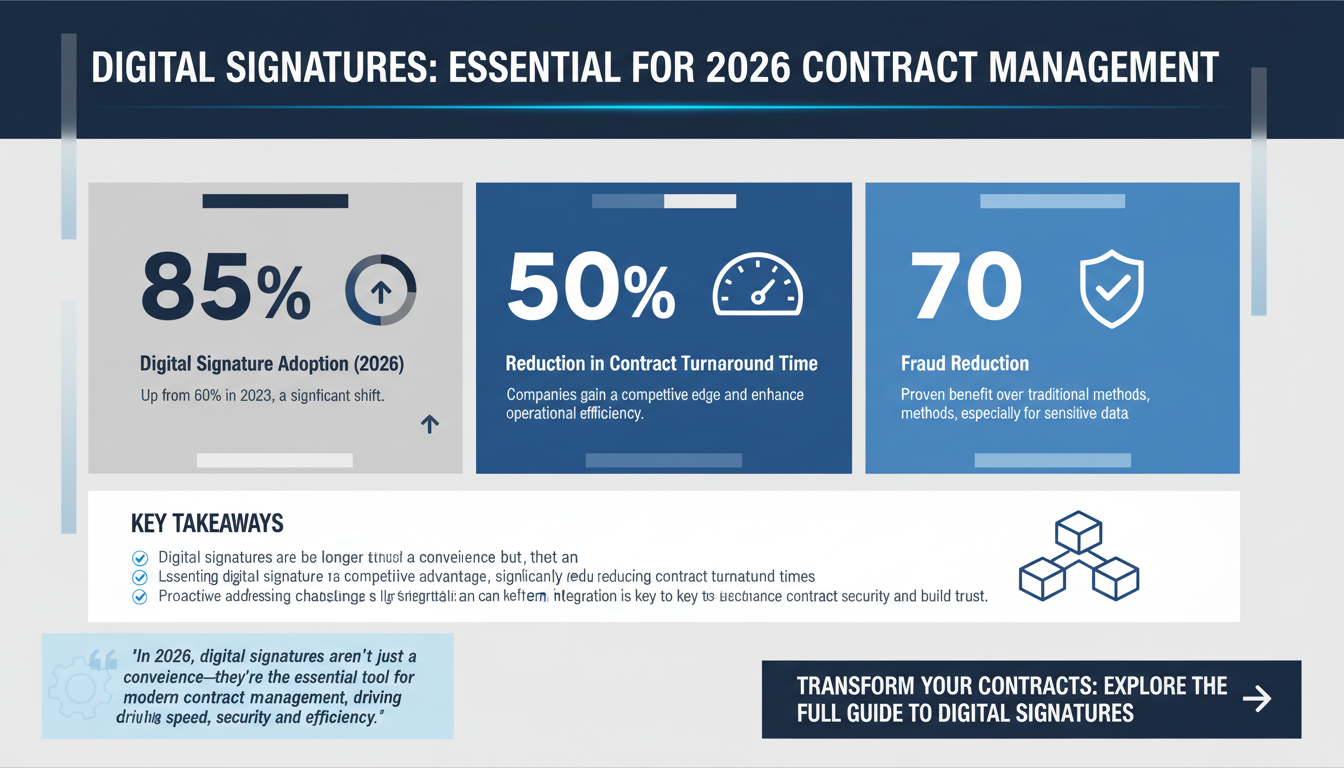
In the rapidly evolving landscape of 2026, contract management has become a cornerstone for both SMBs and enterprises. With increasing globalization and digital transformation, traditional paper-based contracts are now considered archaic. Today, digital signatures are not just a convenience; they are an essential tool for modern contract management, providing speed, security, and efficiency that businesses desperately need. According to a recent Gartner report, 85% of companies have adopted digital signature solutions, marking a significant shift from the 60% reported in 2023.

The shift towards digital signatures is not just about keeping up with the times—it's about gaining a competitive edge. The ability to process contracts quickly and securely can mean the difference between capturing a market opportunity and losing it. As noted by Harvard Business Review, companies that leverage digital signatures see a 50% reduction in turnaround time on contracts, significantly enhancing operational efficiency. This reduction is particularly crucial in industries where time is of the essence, such as finance, healthcare, and technology.
However, the move to digital signatures is not without its challenges. Many businesses face hurdles such as legal compliance, integration with existing systems, and user adoption. McKinsey Insights suggests that addressing these challenges with a strategic approach can unlock substantial benefits. For instance, companies that proactively address compliance issues and invest in robust training programs often see higher adoption rates and smoother transitions.
Trends Shaping Contract Management
Several trends are shaping the future of contract management. Automation of contract workflows is becoming increasingly common, allowing businesses to handle higher volumes of contracts without additional manpower. This trend is supported by AI-driven analytics, which provide insights into contract terms and performance, helping businesses optimize their agreements.
Furthermore, the integration of contract management systems with other enterprise technologies, like ERP and CRM systems, is enabling seamless data flow across organizations. This integration ensures that all departments have access to the most up-to-date contract information, facilitating better decision-making and coordination.
Pro Tip: Leveraging Blockchain for Contract Security
One innovative approach to enhancing contract security is the use of blockchain technology. Blockchain offers a decentralized and immutable ledger for contract transactions, ensuring that every change to a contract is recorded transparently. This not only enhances security but also builds trust among parties, making blockchain an attractive option for businesses looking to implement foolproof contract management systems.
Understanding Digital Signatures: The Foundation of Modern Contract Management
Digital signatures are the cryptographic equivalent of handwritten signatures, providing authenticity, integrity, and non-repudiation. Unlike electronic signatures that can be as simple as a scanned handwritten signature, digital signatures involve a more complex process to ensure the document has not been altered post-signature. This technological advancement is critical in 2026, where cyber threats are more sophisticated.
The process involves generating a unique digital fingerprint of the document, which is encrypted and attached to the document as the signature. This fingerprint changes if the document is altered, thereby alerting all parties involved. As per a Forrester report, digital signatures have been proven to reduce fraud by 70% compared to traditional methods. This reduction in fraud is particularly beneficial to industries that handle sensitive information, such as healthcare and legal services.
Furthermore, digital signatures are legally binding across most jurisdictions worldwide. Legal Technology News highlights that over 80% of countries have enacted laws recognizing digital signatures, making them indispensable for international contracts. This global recognition not only facilitates cross-border transactions but also enhances trust between international partners.
Differentiating Between Electronic and Digital Signatures
While often used interchangeably, electronic and digital signatures are distinct. Electronic signatures can take many forms, such as typed names or scanned signatures, and are primarily used for convenience. Digital signatures, however, use a standardized protocol involving encryption to provide a higher level of security and authenticity.
Understanding this distinction is crucial for businesses, especially when dealing with legal documents or sensitive information. Choosing the appropriate type of signature based on the context and legal requirements can prevent potential legal issues and ensure the integrity of the signed documents.
Expert Insight: The Role of PKI in Digital Signatures
Public Key Infrastructure (PKI) is fundamental to digital signatures, providing the necessary framework for secure electronic transactions. PKI involves the use of a pair of cryptographic keys—a public key and a private key—to encrypt and decrypt data, ensuring that only authorized parties can access or modify the document. This technology underpins the security of digital signatures, making them a reliable choice for businesses worldwide.
Key Benefits of Digital Signatures for SMBs and Enterprises
Adopting digital signatures offers numerous benefits that cater to both small businesses and large enterprises. These include cost savings, increased efficiency, and enhanced security. Nucleus Research found that companies implementing digital signatures experience a 40% reduction in administrative costs. This cost reduction is a significant advantage for SMBs operating on tight budgets.

Efficiency is another significant advantage. By eliminating the need for physical document handling and mailing, digital signatures reduce contract turnaround times dramatically. A case study in Bain & Company's analysis revealed a 75% improvement in contract processing time. This efficiency frees up resources, allowing businesses to focus on core activities and strategic growth.
Security enhancements are equally noteworthy. Digital signatures employ robust encryption measures to safeguard sensitive data, which is crucial given the increasing cyber threats in today's digital world. CSO Online reports that digital signatures offer one of the most secure methods for document verification. The assurance of security is invaluable for companies dealing with confidential or proprietary information.
Cost Efficiency: A Comparative Analysis
When comparing the costs associated with traditional contract management versus digital signatures, the savings are evident. Traditional methods often involve printing, mailing, and storage costs, which can accumulate significantly over time. In contrast, digital signatures eliminate these expenses, offering a more sustainable and environmentally friendly solution.
Moreover, the time saved in processing contracts translates into financial benefits. For instance, a business that reduces its contract processing time by 50% can double its capacity to manage contracts without increasing staff, leading to substantial cost savings and increased profitability.
Pro Tip: Maximizing Efficiency with Automation
To further enhance the efficiency of digital signatures, consider integrating them with automated contract management systems. Automation can streamline the entire contract lifecycle, from creation and approval to signing and storage, minimizing manual intervention and reducing errors. This approach not only speeds up the process but also ensures consistency and compliance across all contracts.
Integrating Digital Signatures into Existing Workflows
Successful integration of digital signatures into existing workflows requires a strategic approach. Businesses must assess their current processes, identify areas for improvement, and select a digital signature solution that aligns with their needs. According to Accenture's insights, customization and scalability are key factors in selecting the right solution. A tailored approach ensures that the digital signature solution seamlessly fits into the business's unique operational landscape.

One common mistake is underestimating the importance of training. Employees need to understand the new system to maximize its potential. PwC emphasizes the role of comprehensive training programs to ensure smooth adoption and transition. Training should not only focus on the technical aspects but also on the benefits and new opportunities digital signatures provide.
Furthermore, integration should not disrupt existing systems. The chosen digital signature solution should seamlessly integrate with tools like CRMs, ERPs, and document management systems. Salesforce provides valuable insights into leveraging APIs and other integration tools to achieve this. A well-integrated system can enhance data flow and improve overall business efficiency.
Steps to Successful Integration
Integrating digital signatures into your workflow requires a step-by-step approach. Begin by conducting a thorough audit of your current contract management processes to identify areas that can benefit from digital transformation. Next, select a digital signature solution that offers the necessary features and flexibility to meet your business needs.
Implement a pilot program to test the solution in a controlled environment before full-scale deployment. This allows you to address any issues and adjust the system as needed. Finally, ensure comprehensive training and support for all users to facilitate a smooth transition and maximize the benefits of the new system.
Expert Insight: The Role of APIs in Integration
Application Programming Interfaces (APIs) play a crucial role in the integration of digital signatures with existing systems. APIs enable different software applications to communicate and work together seamlessly, ensuring that digital signatures can be incorporated into existing workflows without disrupting operations. Investing in a solution with robust API capabilities can significantly enhance the flexibility and scalability of your digital signature implementation.
Legal Considerations: Ensuring Compliance and Validity
Compliance with legal standards is a critical aspect when adopting digital signatures. In 2026, most jurisdictions have clear regulations regarding the use of digital signatures, such as the eIDAS regulation in the EU and the ESIGN Act in the US. According to American Bar Association, understanding these regulations is vital for legal validity. It's crucial for businesses to stay updated with these regulations to avoid legal pitfalls.
Businesses must ensure their digital signature solutions comply with these legal frameworks to guarantee enforceability. This often involves working with legal teams to verify compliance with industry-specific regulations. Deloitte provides comprehensive guidelines on navigating these complexities. Regular audits and updates to the digital signature solution can prevent compliance issues and legal challenges.
Moreover, maintaining a robust audit trail is essential. Digital signatures should provide clear evidence of the signing process, which can be crucial in legal disputes. Law.com discusses how audit trails enhance transparency and accountability. Such documentation serves as a reliable record of transactions, protecting businesses in case of disputes.
Global Compliance: Navigating International Laws
For businesses operating internationally, understanding the legal requirements for digital signatures in different jurisdictions is crucial. While many countries recognize digital signatures, the specific regulations and requirements can vary. Companies must ensure their digital signature solutions are compliant with the laws of each country where they operate to avoid legal complications and ensure the enforceability of their contracts.
Staying informed about changes in international regulations and working with legal experts familiar with global e-signature laws can help businesses navigate these complexities effectively. This proactive approach minimizes risks and supports seamless international operations.
Pro Tip: Regular Compliance Audits
To ensure continuous compliance with evolving regulations, businesses should conduct regular audits of their digital signature processes and solutions. These audits can identify potential compliance gaps and provide an opportunity to update practices and technologies as needed. Involving legal and IT teams in these audits ensures that all aspects of compliance are thoroughly addressed.
Case Studies: Success Stories of Digital Signature Implementation
Real-world examples of successful digital signature implementation highlight their transformative impact. For instance, a leading financial institution reduced its processing time by 60% after integrating digital signatures, as detailed in a Finextra report. This efficiency allowed the institution to process more transactions and improve customer satisfaction significantly.
In the healthcare sector, digital signatures have streamlined patient consent processes, reducing paperwork and improving patient experience. A study by Health Affairs reveals that digital signatures can save hospitals millions annually in administrative costs. This cost saving can be redirected towards patient care and medical research.
Additionally, in real estate, digital signatures have expedited contract closures, allowing agents to close deals faster and with less hassle. Realtor.com outlines how top real estate firms leverage digital tools to enhance client satisfaction. This swift processing can lead to higher client retention and increased referrals.
Industry-Specific Implementations
Different industries have unique requirements for digital signature implementation. In the legal sector, for instance, digital signatures are critical for maintaining the integrity and confidentiality of legal documents. Firms that have adopted digital signatures report improved efficiency in handling legal briefs and contracts, leading to faster resolution of cases.
The education sector is another area where digital signatures are making a significant impact. Universities and colleges use digital signatures to streamline admissions and administrative processes, reducing the paperwork burden on staff and students alike. This shift not only enhances operational efficiency but also contributes to a more sustainable, paperless campus environment.
Expert Insight: Lessons Learned from Successful Implementations
One important lesson from successful digital signature implementations is the value of stakeholder engagement. Engaging all relevant stakeholders—from IT and legal to end-users—during the planning and implementation phases ensures that the solution meets the needs of all parties involved. This collaborative approach can significantly enhance the success of the implementation and ensure widespread adoption across the organization.
Expert Insights: Navigating the Future of Digital Signatures
Industry experts predict that the role of digital signatures will continue to grow, driven by advancements in AI and blockchain technologies. According to MIT Technology Review, AI will enhance the verification process, while blockchain will ensure immutable records. These technologies promise to make digital signatures even more secure and reliable.
Experts also emphasize the importance of staying informed about the latest trends and technologies. Regularly updating systems and practices ensures businesses remain competitive and compliant. Forbes highlights the necessity of continuous learning and adaptation in this rapidly changing field. Companies that invest in innovation are likely to lead their industries.
Furthermore, collaboration between IT and legal departments is essential. By working together, businesses can identify potential risks and develop strategies to mitigate them. Accenture's blog provides insights into fostering such cross-departmental collaborations. This synergy ensures that the digital signature solutions are both technologically advanced and legally sound.
Future Technologies Shaping Digital Signatures
Emerging technologies such as quantum computing and machine learning are poised to further revolutionize digital signatures. Quantum computing, with its potential to solve complex encryption problems, could lead to even more secure digital signature protocols. Meanwhile, machine learning algorithms can predict and enhance user behavior, making the digital signing process more intuitive and user-friendly.
Staying abreast of these technological advancements can provide businesses with the tools needed to remain secure and competitive in an increasingly digital world. By adopting a forward-thinking approach, companies can ensure their digital signature solutions evolve alongside these innovations.
Pro Tip: Embracing Continuous Innovation
To fully benefit from the advancements in digital signature technology, businesses should foster a culture of continuous innovation. Encourage teams to experiment with new technologies and approaches, and create an environment where learning from both successes and failures is valued. This mindset can drive consistent improvement and help businesses stay ahead of the curve.
Common Mistakes to Avoid When Implementing Digital Signatures
Despite the clear benefits, some businesses make common mistakes when implementing digital signatures. One error is selecting a solution based solely on cost rather than functionality and compliance. Capterra advises evaluating multiple solutions to find one that meets all business needs. A comprehensive evaluation ensures that the chosen solution is both effective and sustainable.
Another mistake is neglecting user training, which can lead to low adoption rates and inefficiencies. As noted by Gartner, comprehensive training programs are critical to successful implementation. Training should be ongoing to accommodate updates and new employees.
Lastly, businesses often overlook the importance of maintaining compliance with evolving regulations. Regular audits and updates are necessary to ensure ongoing legal validity. PwC offers guidance on maintaining compliance through regular audits. By prioritizing compliance, businesses can avoid costly legal disputes and protect their reputation.
Avoiding Pitfalls in Vendor Selection
Selecting the right vendor for digital signatures is crucial, yet many businesses make the mistake of focusing solely on costs or features without considering vendor reputation and support. A vendor with a strong track record and excellent customer support can provide invaluable assistance during implementation and beyond, ensuring smooth operations and quick resolution of any issues.
Engage in thorough research, read customer reviews, and request case studies or references to assess potential vendors. This diligence can prevent future headaches and ensure a long-term, successful partnership.
Expert Insight: The Importance of a Phased Rollout
Implementing digital signatures across an organization can be complex, and attempting to do so all at once can lead to disruptions and resistance. A phased rollout, where the solution is gradually introduced to different departments or processes, allows for adjustments to be made based on feedback and experiences. This methodical approach can enhance adoption rates and ensure a smoother transition.
FAQs: Addressing Common Questions About Digital Signatures
Are digital signatures legally binding?
Yes, digital signatures are legally binding in most jurisdictions worldwide, thanks to laws such as the eIDAS regulation in the EU and the ESIGN Act in the US. These laws provide a framework that ensures the legality and enforceability of digital signatures.
How secure are digital signatures?
Digital signatures are highly secure as they use encryption to verify the authenticity and integrity of a document, making them more secure than traditional signatures. The encryption technology used is continuously updated to counter emerging threats.
What industries benefit most from digital signatures?
Industries such as legal, healthcare, real estate, and finance benefit significantly from digital signatures due to their need for secure and efficient contract management. These sectors handle sensitive information and require quick, reliable transactions.
How do I choose the right digital signature solution?
When choosing a digital signature solution, consider factors such as compliance, ease of integration, user experience, and scalability to ensure it meets your business needs. Evaluating vendor support and customer reviews can also provide valuable insights.
Can digital signatures be used internationally?
Yes, digital signatures are recognized internationally, but it's essential to ensure the solution complies with the legal requirements of each jurisdiction involved. International compliance enhances trust and facilitates global business partnerships.
What are the cost implications of implementing digital signatures?
While there may be initial investment costs, digital signatures often lead to significant cost savings in the long run by reducing administrative expenses, speeding up transaction times, and minimizing the risk of errors and fraud.
Conclusion: Embracing Digital Signatures for a Competitive Edge
As we move further into the digital age, the importance of digital signatures in contract management cannot be overstated. They offer SMBs and enterprises a competitive edge by streamlining processes, reducing costs, and enhancing security. By addressing challenges such as compliance and integration, businesses can harness the full potential of digital signatures. The future promises even more advancements as technology evolves, and those who adapt will thrive.
To further enhance your business operations, consider integrating Apparatuz for workflow automation or Applicantz for recruitment management. Also, explore tools like Schedly for scheduling and Supportly for customer support management. Together, these solutions provide a comprehensive approach to modern business operations.