
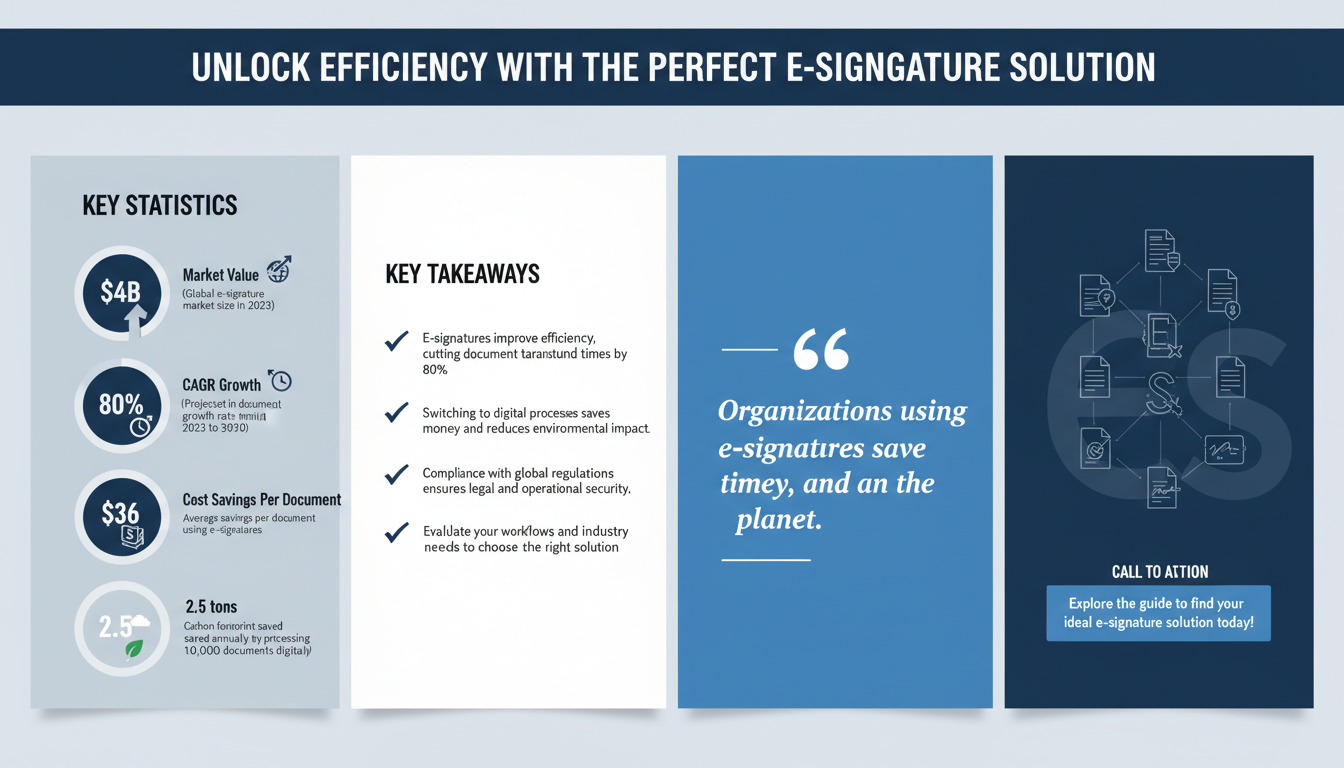
In today’s fast-paced business environment, electronic signatures (e-signatures) have transitioned from being a luxury to a necessity. Organizations across industries are increasingly adopting these solutions to streamline workflows, enhance security, and save time and money compared to traditional paper-based processes. The global e-signature market, valued at $4 billion in 2023, is projected to grow at a compound annual growth rate (CAGR) of 28% between 2023 and 2030, underscoring its pivotal role in modern business operations.
However, with countless e-signature solutions available, selecting the right one for your business can feel overwhelming. Each platform comes with its unique features, integrations, and pricing models, making it essential to identify a solution tailored to your specific needs. This comprehensive guide will walk you through the importance of e-signatures, how to evaluate your business needs, key features to look for, and common mistakes to avoid. By the end, you’ll be equipped to make an informed decision that ensures your chosen solution supports your organizational goals effectively.
Understanding the Importance of Electronic Signatures
Electronic signatures are much more than a digital replacement for handwritten signatures. They are legally binding, highly secure, and essential for modernizing business processes in an increasingly digital world. According to a Forrester report, organizations that adopt e-signatures achieve document turnaround times that are 80% faster, along with a 50% reduction in sales cycle duration. This efficiency can make a significant difference for businesses striving to stay competitive.

Beyond efficiency, e-signatures enhance compliance with global legal frameworks, including the U.S. ESIGN Act, the EU’s eIDAS regulation, and similar legislation worldwide. For industries operating in highly regulated environments, such as finance, healthcare, and legal services, such compliance is not optional—it’s a critical requirement to avoid legal penalties and build client trust.
In addition to compliance and efficiency, e-signatures contribute to sustainability. They significantly reduce paper usage, helping organizations meet their environmental, social, and governance (ESG) goals. For instance, a company that processes 10,000 documents annually can save up to 1 ton of paper and reduce its carbon footprint by approximately 2.5 tons of CO2 by switching to digital processes.
Key Benefits of Electronic Signatures
- Cost Savings: By eliminating paper, printing, and storage costs, businesses can save thousands of dollars annually. A study by DocuSign revealed that organizations save an average of $36 per document by transitioning to e-signatures.
- Enhanced Security: E-signatures utilize encryption, tamper-evident technology, and detailed audit trails, ensuring that sensitive information is protected at every step.
- Global Accessibility: With e-signatures, documents can be signed from anywhere in the world, making them indispensable for remote and global teams.
- Improved Compliance: Solutions that adhere to legal standards provide peace of mind and ensure that signed documents hold up in court if disputes arise.
- Time Savings: Businesses can reduce contract turnaround times from weeks to hours, speeding up critical processes like sales, onboarding, and procurement.
These benefits make e-signatures a must-have for businesses aiming to improve efficiency while meeting the demands of a digital-first economy.
Evaluating Your Business Needs
Choosing the right e-signature solution starts with a thorough understanding of your unique business requirements. By assessing your operational priorities, document workflows, and industry-specific needs, you can narrow down your options and select a platform that aligns with your objectives.

1. What is the Volume of Documents You Process?
Document volume is a key factor when selecting an e-signature solution. Small businesses handling a few contracts or agreements each month may prioritize simplicity and affordability. In contrast, enterprises managing hundreds or thousands of documents daily will require scalable platforms that offer automation features, bulk sending capabilities, and robust reporting tools. For instance, a multinational corporation processing 50,000 contracts annually would benefit from a solution that integrates with its CRM and supports advanced workflow automation.
2. What Level of Security Do You Require?
Security is paramount, especially for businesses in regulated industries like finance and healthcare. For these sectors, features such as end-to-end encryption, two-factor authentication (2FA), and tamper-proof audit trails are essential. Additionally, ensure the platform complies with industry-specific regulations such as HIPAA (for healthcare) or PCI DSS (for financial transactions).
For example, a healthcare provider handling patient consent forms must ensure its e-signature solution is HIPAA-compliant to protect sensitive patient data and avoid costly penalties.
3. What Integrations Are Necessary?
Integration capabilities can significantly impact your team’s productivity. Look for solutions that seamlessly connect with your existing tools, such as CRM platforms (e.g., Salesforce), project management software (e.g., Trello or Asana), and cloud storage services (e.g., Google Drive or Microsoft OneDrive). An e-signature platform that integrates with your tech stack ensures a seamless, end-to-end workflow without requiring manual intervention.
For example, a sales team using Salesforce can automate contract generation, sending, and tracking with an integrated e-signature solution, reducing administrative overhead and accelerating deal closures.
4. What is Your Budget?
Budget considerations are critical, but it’s important to balance cost with value. While low-cost solutions may be tempting, they often lack essential features like advanced security, compliance certifications, or scalability. Assess the total cost of ownership, including licensing fees, implementation costs, and potential savings from increased efficiency.
Essential Features to Look for in an Electronic Signature Solution
Not all e-signature platforms are created equal. To ensure you invest in a solution that delivers maximum value, prioritize the following features:

1. Security and Compliance
Security and compliance should be non-negotiable. Look for platforms that adhere to global legal standards such as the ESIGN Act, eIDAS, and UETA. Features like 256-bit encryption, SOC 2 certification, and compliance with GDPR (for data protection in the EU) demonstrate a platform’s commitment to safeguarding user data.
2. User Experience (UX)
An intuitive user interface is crucial for adoption. A complex platform can lead to errors and slow down workflows, frustrating both your internal teams and external signers. Opt for solutions with a clean, user-friendly interface and features like drag-and-drop document upload and customizable workflows.
3. Scalability
As your business grows, your document management needs will evolve. Choose a solution that can scale with you, whether that means adding more users, supporting higher document volumes, or integrating with advanced automation tools.
4. Integration Capabilities
Seamless integration ensures your e-signature platform works in harmony with your existing software ecosystem. Look for platforms that support APIs, enabling custom integrations for unique workflows.
5. Customization
Customization options, such as branded email templates, personalized workflows, and custom document templates, enhance your professional image and improve user experience.
Proprietary Framework: The S.I.G.N. Method for Evaluating E-Signature Platforms
Zignature has developed the S.I.G.N. Method, a proprietary framework to simplify the decision-making process. This four-step framework focuses on:
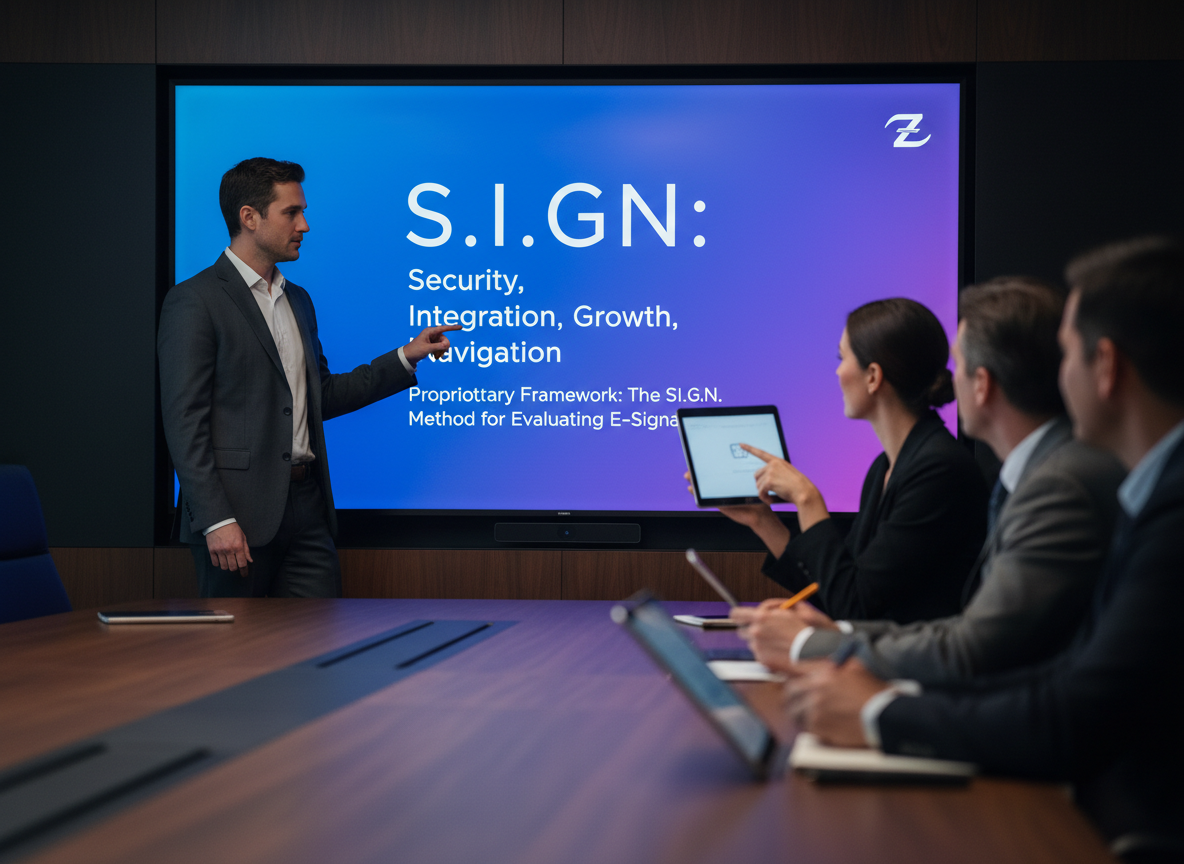
- S – Security and Compliance: Evaluate the platform’s adherence to legal and security standards.
- I – Integration: Check compatibility with your existing tools and systems.
- G – Growth Potential: Ensure scalability to meet future demands.
- N – Navigation and UX: Prioritize ease of use for internal teams and external users.
By applying the S.I.G.N. Method, you can systematically evaluate platforms and choose one that aligns with your long-term goals.
Common Mistakes to Avoid
1. Ignoring Compliance Requirements
Failure to select a compliant solution can result in legal challenges, data breaches, and fines. Always prioritize platforms that meet your industry’s regulatory standards.
2. Overlooking Security Features
Not all platforms offer robust security. Ensure encryption, 2FA, and audit trail capabilities are included in your chosen solution.
3. Choosing Based on Price Alone
While budget constraints are a consideration, an inexpensive platform that lacks critical features may cost more in the long run due to inefficiencies or compliance risks.
Case Study: How a Real Estate Firm Streamlined Operations with E-Signatures
A mid-sized real estate agency struggled with contract delays, often losing clients. After implementing an e-signature solution with CRM integration, it reduced contract turnaround times from 5 days to under 24 hours, improving client satisfaction and increasing deal closures by 30% in the first year.
Conclusion
Choosing the right e-signature solution is a critical step toward modernizing your business. By understanding your needs, prioritizing essential features, and avoiding common pitfalls, you can select a platform that enhances efficiency, security, and scalability. Ready to take the next step? Discover Zignature's features today and transform your workflows.
To further enhance your digital workflows, explore our sister platforms: Apparatuz for workflow automation, Applicantz for recruitment management, Schedly for scheduling and appointments, Supportly for customer support, and Zatisfied for feedback management. Together, these tools create a comprehensive ecosystem that complements your digital signature strategy.