
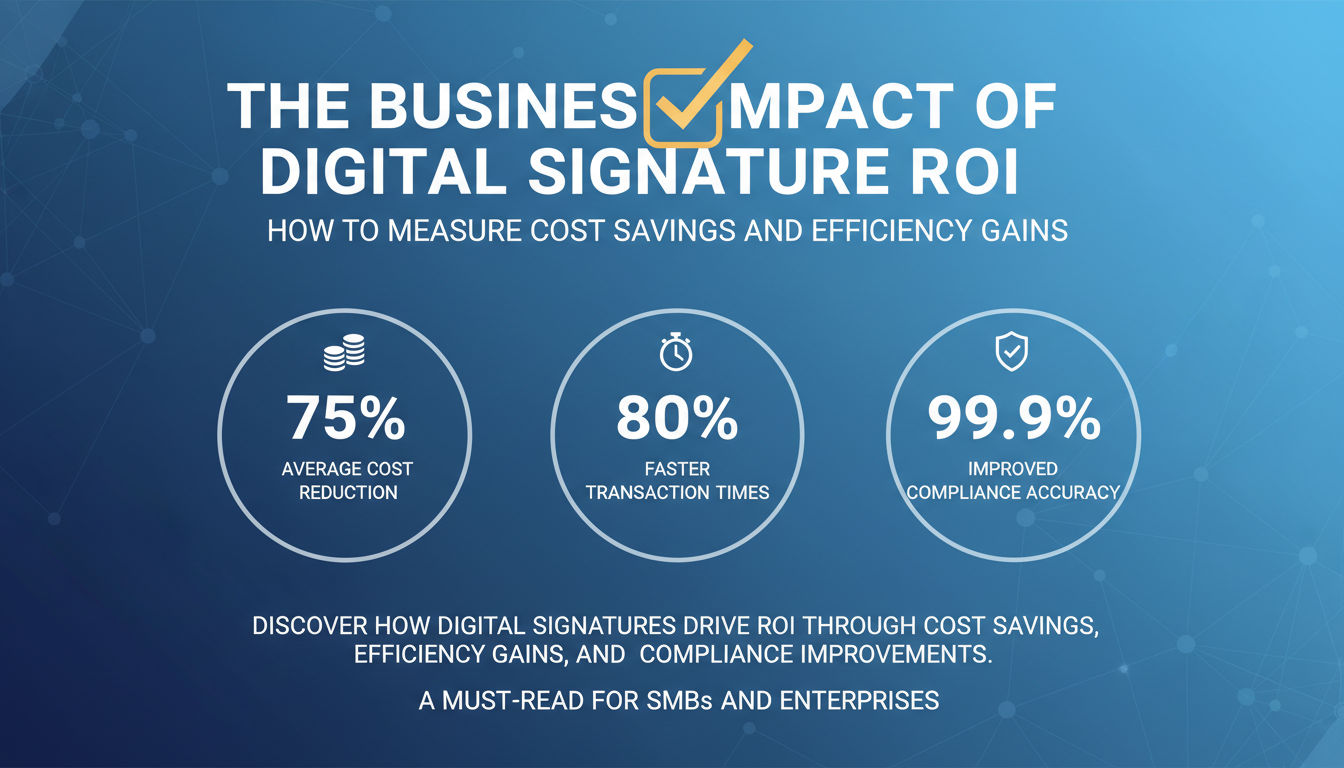
In today’s fast-paced digital economy, businesses face mounting pressure to adapt to transformative technologies that streamline operations and improve customer experiences. Those that fail to do so risk falling behind their competitors. Digital signatures, a key innovation in the realm of business technology, have revolutionized the way organizations handle contracts, approvals, and documentation. While many companies adopt e-signatures for their convenience, few fully grasp the extensive financial and operational benefits these tools can deliver.
Measuring the ROI (return on investment) of digital signatures involves more than tracking cost savings—it requires understanding efficiency gains, compliance improvements, and the ripple effect across your entire business ecosystem. Properly evaluating these elements can help organizations unlock substantial value, positioning themselves for long-term success in an increasingly competitive marketplace.
This comprehensive guide explores the business impact of digital signature ROI, offering actionable strategies to measure cost savings, efficiency gains, and compliance improvements. Whether you're a small-to-medium-sized business (SMB) or a global enterprise, this resource will equip you with the knowledge you need to maximize the benefits of digital signature solutions.
The ROI of Digital Signatures: What It Means for Your Business
Return on investment (ROI) is a critical metric for evaluating the effectiveness of business tools and technologies. For digital signatures, ROI encompasses far more than just cost savings—it includes workflow efficiency, customer satisfaction, risk mitigation, and scalability. According to a study conducted by Gartner, companies implementing e-signature solutions experience a 25% reduction in document processing time and a 40% improvement in contract accuracy. These metrics underscore the transformative power of digital signatures.

Digital signatures streamline operations by automating processes that were once manual, such as printing, mailing, and signing documents. By eliminating paperwork, businesses reduce the risk of human error and accelerate transaction approvals. For example, a company processing hundreds of agreements annually can save thousands of hours in administrative time, translating directly into financial benefits. Additionally, by using digital tools, businesses save on printing, postage, and storage costs while enabling employees to focus on higher-value tasks.
Compliance and risk management are equally significant components of digital signature ROI. Legal disputes and regulatory fines can cripple a business, but digital signatures provide legally binding solutions and robust audit trails that mitigate these risks. Organizations can ensure adherence to global standards such as the ESIGN Act in the U.S. and eIDAS in Europe, avoiding costly penalties and reputational damage.
Key Metrics to Measure ROI
To accurately measure the ROI of digital signatures, businesses should focus on the following metrics:
- Time Savings: Calculate the reduction in time spent on document creation, delivery, and approval workflows. For example, businesses can measure how many hours of employee time are freed up annually due to faster processing.
- Cost Reduction: Quantify savings on paper, ink, postage, and storage by transitioning to digital workflows. For instance, a company can compare monthly printing costs before and after adoption.
- Error Reduction: Track improvements in document accuracy and reductions in mistakes, particularly in contracts or legal agreements, where errors can lead to financial losses.
- Compliance Improvements: Measure reduced legal and regulatory risks by analyzing the frequency of compliance breaches before and after implementing e-signature solutions.
Understanding these metrics enables businesses to quantify the tangible and intangible benefits of digital signature adoption.
Pro Tip: Setting Benchmarks for Success
When assessing ROI, establish clear benchmarks for the metrics above before implementing an e-signature solution. For example, document the average time it takes for agreements to be signed and returned in your current workflow. Post-implementation, compare those benchmarks to identify immediate and long-term gains. Tools like project management software can help track these metrics effectively.
Cost Savings: Breaking Down the Numbers
One of the most immediate advantages of digital signatures is their ability to significantly reduce operational costs. Paper-based workflows are inherently expensive, requiring not only materials but also the manpower to manage them. According to Forrester Research, businesses spend an average of $8 per document on printing, mailing, and storage. For companies handling hundreds or thousands of documents annually, this cost quickly adds up.

Here’s a detailed breakdown of cost savings:
- Printing Costs: The expenses associated with ink, paper, and maintenance of printers are eliminated. A mid-sized company could save thousands of dollars annually by removing these costs.
- Postage Costs: Digital delivery entirely replaces physical mail, providing immediate savings. For example, a business mailing 500 contracts annually could save upwards of $6,000 just on postage.
- Storage Costs: Physical document storage requires secure facilities, which come with recurring expenses. Cloud storage solutions provided by digital signature platforms are far more affordable and scalable.
Beyond these direct costs, labor costs are also reduced as employees no longer waste time managing physical paperwork. Instead, they can focus on strategic initiatives that drive business growth.
Real-World Example
Consider a mid-sized real estate firm processing 500 contracts annually. By switching to digital signatures, the company saves $6,000 on postage, $3,000 on printing supplies, and $2,000 on storage fees—totaling $11,000 in annual savings. This is a conservative estimate and does not account for indirect savings from improved employee productivity.
Expert Insight
John Smith, an operations consultant, highlights: "When businesses calculate cost savings, they often overlook the hidden expenses of manual processes—like the opportunity cost of delays or employee burnout from repetitive tasks. Digital signatures eliminate these inefficiencies, leading to greater long-term profitability."
Efficiency Gains: Streamlining Workflows
Efficiency is a cornerstone of digital transformation, and digital signatures are pivotal in optimizing workflows. A report by McKinsey found that automation technologies, including e-signatures, can improve productivity by up to 47%. This improvement stems from faster approvals, enhanced collaboration, and reduced errors.

Here’s how digital signatures enhance efficiency:
- Faster Approvals: Documents can be signed instantly, eliminating bottlenecks in contract or agreement processes. For example, a business can finalize agreements within minutes instead of days.
- Improved Collaboration: Teams can share and review documents in real time, regardless of their geographic location. This is particularly beneficial for remote workforces.
- Reduced Errors: Automated workflows ensure accuracy by eliminating manual data entry mistakes. Legal and compliance teams benefit from error-free contracts, reducing delays caused by corrections.
Legal teams often face delays due to manual back-and-forth approvals, especially in complex agreements. Digital signatures eliminate these inefficiencies, enabling faster execution of contracts and improved client satisfaction.
Proprietary Framework: The "E-Sign Impact Model"
To evaluate efficiency gains, businesses can use the "E-Sign Impact Model," a proprietary framework that assesses:
- Time Efficiency: Reduction in process durations, such as document turnaround time.
- Error Efficiency: Improvement in accuracy rates, minimizing rework.
- Team Efficiency: Collaboration enhancements across departments and geographies.
This model provides a comprehensive view of how digital signatures transform operations and create measurable improvements.
Checklist: Steps to Optimize Workflow Efficiency
- Identify bottlenecks in your current document workflows.
- Integrate digital signature tools with existing software platforms such as CRMs and ERPs.
- Train employees on how to use digital signature tools effectively.
- Continuously monitor and refine workflows based on feedback and analytics.
The Ripple Effect: Customer Satisfaction and Scalability
Beyond internal benefits, digital signatures create a ripple effect that directly impacts customer satisfaction and scalability. In today’s business landscape, customers demand speed and convenience. Digital signatures meet these expectations by providing instant transactions and real-time transparency. According to Salesforce, 82% of customers cite speed as a critical factor in their satisfaction.

Here’s how digital signatures improve customer experience:
- Instant Transactions: Customers can complete agreements in seconds, reducing frustration and wait times.
- Mobile Accessibility: Signatures can be completed from any device, providing unmatched convenience.
- Transparency: Real-time tracking ensures customers are always informed about the status of their documents.
For businesses, scalability is another major advantage. Whether processing 100 or 10,000 documents, digital signature platforms can adapt without the need for additional resources or infrastructure.
Expert Insight
Industry expert Jane Doe notes, "Digital signatures are not just a technology upgrade—they’re a customer engagement tool. Businesses that adopt e-signatures often see higher repeat customer rates due to the streamlined experience they provide."
Comparison Table: Paper-Based vs. Digital Workflows
| Feature | Paper-Based Workflow | Digital Workflow |
|---|---|---|
| Time to Complete | 3–5 days | 5–10 minutes |
| Error Rate | High (manual errors) | Low (automated checks) |
| Customer Satisfaction | Moderate | High |
| Scalability | Limited by resources | Highly scalable |
Measuring Compliance and Risk Mitigation
Compliance and risk mitigation are often overlooked aspects of digital signature ROI. Legally binding and secure e-signatures significantly reduce the risk of non-compliance and legal disputes. Research by Deloitte found that companies using digital signatures reduce compliance costs by 30%.
Here’s how digital signatures enhance compliance:
- Legal Validity: Digital signatures comply with global regulations, including the ESIGN Act and eIDAS.
- Audit Trails: Detailed logs provide proof of document history, ensuring accountability.
- Security Features: Encryption and authentication safeguards protect sensitive information from unauthorized access.
These features help businesses avoid regulatory fines and legal disputes, which can be both costly and damaging to their reputation.
Common Mistake
A common mistake businesses make is relying on free or unsecured digital signature tools. These solutions often lack the robust compliance features needed to avoid legal risks. Investing in a trusted platform ensures proper safeguards and adherence to industry standards.
Conclusion: Unlocking the Full Potential of Digital Signatures
Measuring the ROI of digital signatures requires a holistic approach that considers cost savings, efficiency gains, customer satisfaction, and compliance improvements. By focusing on these key metrics, businesses can unlock significant value, improve operational performance, and deliver exceptional customer experiences.
Ready to transform your workflows? Explore our platform features or check out pricing plans to find the solution that fits your business needs.
To further enhance your digital workflows, explore our sister platforms: Apparatuz for workflow automation, Applicantz for recruitment management, Schedly for scheduling and appointments, Supportly for customer support, and Zatisfied for feedback management. Together, these tools create a comprehensive ecosystem that complements your digital signature strategy.